SimpleX Chat Wants Its 400K+ Users to Become Investors Too #
It's FOSS




Monerica
SimpleX Chat calls itself “the messaging network that can’t identify you,” and that is not marketing hyperbole — it is the actual design. For a privacy community built around Monero, that combination of unlinkable messaging and unlinkable money is a natural fit. This post looks at why SimpleX matters, the growing set of private Monero communities already running on it, and the news that users can now buy a stake in the project itself through an equity crowdfunding round on Wefunder.

SimpleX Chat
Alain Brenzikofer presents our design for Community Credits at Web3 Summit – a payment solution for private infrastructure payments on SimpleX network. See the whitepaper at: https://simplex.chat/credits/whitepaper.pdf
State of Surveillance
This secure messaging comparison guide evaluates Signal, Session, SimpleX, Briar, WhatsApp, and Telegram across criteria including phone number requirements, architecture, and metadata protection. SimpleX is highlighted as requiring no phone number, using a decentralized architecture with no metadata collection, and being best suited for maximum privacy, though the guide notes its small user base as a practical limitation.
Help Net Security
Help Net Security showcases SimpleX Chat as a free, private, open-source messenger that eliminates traditional user identifiers and stores data locally on devices. The article highlights end-to-end encrypted communications, contact addition through one-time links or QR codes, encrypted audio/video calls via WebRTC with hidden IP addresses, and security verification through comparable security codes between contacts.
L'unica chat VERAMENTE anonima | SimpleX
rdwei
Eylenburg
This comprehensive messenger comparison states that SimpleX "probably has the best privacy and anonymity of all the messengers compared here," noting it requires no accounts or IDs and users connect via one-time invitation links. It identifies the main limitation as adoption - being a relatively new app with few users makes it impractical for most people who need to communicate with existing contacts.

Citadel Dispatch
This Citadel Dispatch podcast episode features Evgeny Poberezkin discussing SimpleX Chat's radically different approach to user identity, where addresses are assigned to connections rather than endpoints. The conversation covers critiques of the MLS protocol, upcoming scalable channels to rival Telegram, and a sustainability model where large channels fund network operations.
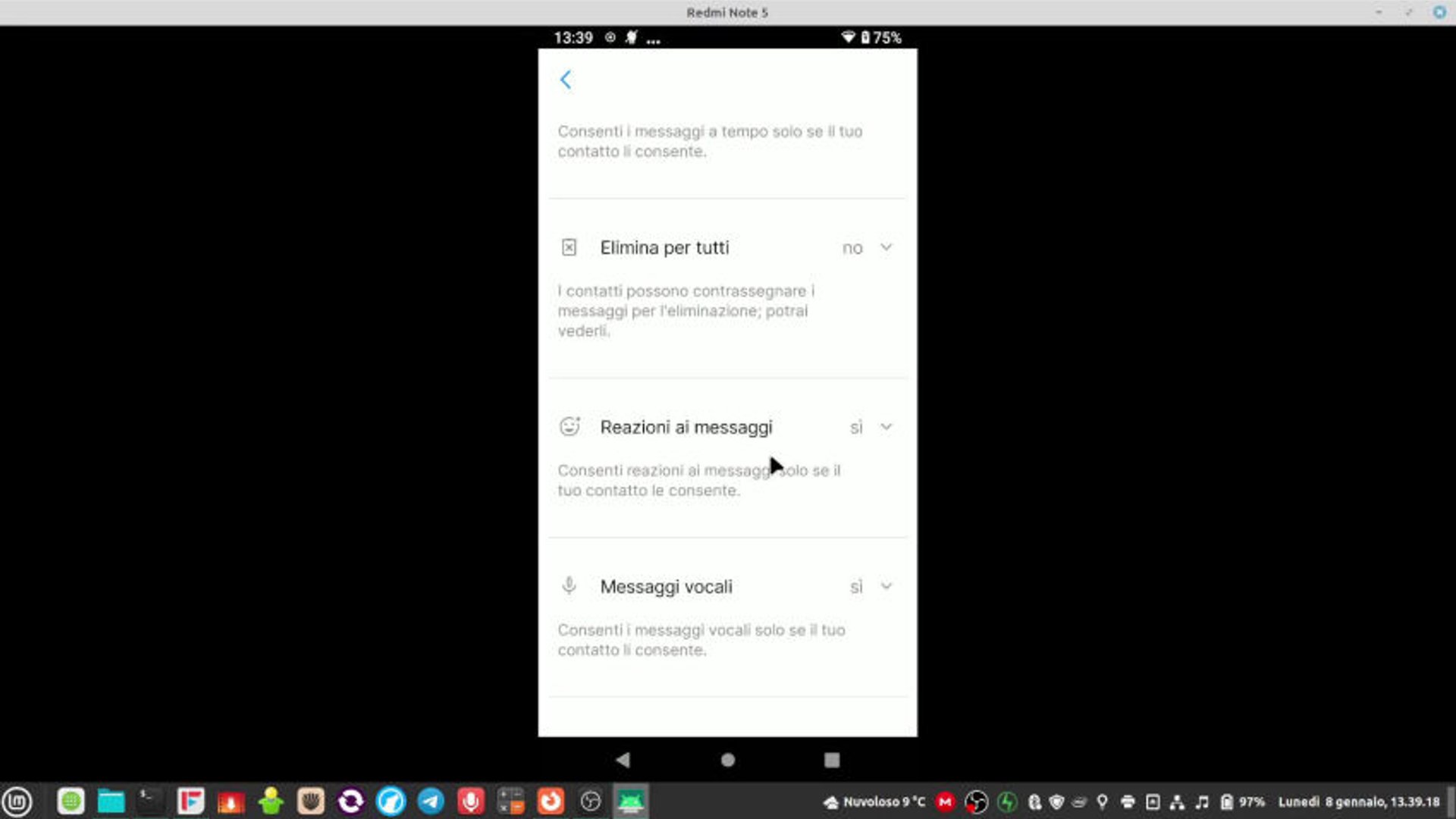
PeerTube Uno Italia
Video review of SimpleX Chat v5.4 on Italian federated PeerTube instance. Covers connecting mobile and desktop apps via quantum-resistant protocol and improved group features.

Kakie messendzhery rabotayut v Rossii a kakie zablokirovany
AppVisor.ru
This Russian article reports that SimpleX Chat was among several decentralized messengers blocked by Moscow City Court order in September 2024, alongside Briar, Session, and Verum. It notes the blocking was due to SimpleX's architecture that makes user tracking technically extremely difficult.
Freeonline.org
This Italian review awards SimpleX Chat "Site of the Day" status, describing it as a messaging platform that eliminates user identifiers entirely. It highlights advanced end-to-end encryption, local-only data storage, Tor network access, and availability across all major platforms, while noting the experience is more technical than competing services.
SimpleX Chat: comunicare online in totale anonimato
Web Apps Magazine
This Italian article presents SimpleX as a paradigm shift in private messaging, highlighting its lack of phone number requirements, decentralized relay system, and metadata protection. It positions the app for journalists, activists, and privacy-conscious users, while honestly noting the tradeoff of losing all contacts if the phone is lost without backups.

SimpleX Chat
SimpleX Chat presentation at MoneroTopia 2026 conference in Mexico City, covering the latest developments in the SimpleX network and its alignment with the Monero privacy ecosystem.

SimpleX Chat - prywatnosc bez kompromisow
opentech.guru
This Polish article describes SimpleX as a fully open-source, decentralized messenger that eliminates user identifiers entirely, using separate one-way message queues per contact. It highlights double ratchet and post-quantum key exchange encryption, incognito mode, Tor connectivity, and availability across all major platforms including CLI, calling the servers "dumb pipes" with no knowledge of who connects with whom.


Quelle messagerie chiffree est la mieux securisee? Signal, Session et SimpleX mais pas Whatsapp!
Nicolas Forcet
This French-language article positions SimpleX between Signal and Session in a security hierarchy, noting its protocol design prevents servers from mapping social connections by using separate channels for incoming and outgoing messages. SimpleX is praised for stronger privacy protections including app-level locking, ephemeral messages, and Tor/VPN compatibility, though the author notes lower adoption rates may be a practical drawback.
Darwin Dynamic
This 2026 review describes SimpleX Chat as a strong privacy option that eliminates unique user IDs and features end-to-end encryption with decentralized routing. The reviewer notes a learning curve and ongoing development issues as drawbacks, but ultimately recommends it for privacy-conscious individuals willing to navigate a more complex interface than mainstream alternatives.
Darwin Dynamic
SimpleX Chat ranks third among five recommended private messaging apps for 2026. The article emphasizes that it requires no user identification, making it highly secure and anonymous, while noting that initial configuration can be challenging and occasional technical issues may occur.
Factually
This product comparison ranks SimpleX as the best choice for maximal anonymity and minimal metadata, describing its peer-to-peer design that avoids server-mediated trust and emphasizes anonymity. The review notes SimpleX's UI is minimal and focused on anonymity features, but acknowledges the app is younger, less battle-tested, and has a smaller user base compared to Signal and Matrix.

CloudSEK
CloudSEK positions SimpleX as the best phone-number-free messaging app, highlighting its relay-based routing, zero metadata approach, and private invitation links instead of identity-based profiles. The article notes a trade-off between SimpleX's strong metadata protection and its smaller user community compared to more established platforms like Signal or Telegram.
Beebom
Beebom lists SimpleX Chat third among the best secure messaging apps, calling it the "Best Minimal Secure Messaging App." The article highlights its lack of user IDs, incognito mode with random usernames, live message typing preview, screenshot blocking, and contact verification, noting it requires no email or phone number to use.
Децентрализованные мессенджеры: 8 альтернатив WhatsApp и Telegram в 2026 году
itforprof.com
This Russian-language article describes SimpleX Chat as a decentralized platform that uses cryptographic keys instead of accounts for identification and employs Double Ratchet encryption with quantum-resistant extensions. The article notes that servers cannot access metadata about who communicates with whom, but warns that SimpleX is blocked by Roskomnadzor in Russia and requires a VPN to access.

Выпуск SimpleX Chat 6.5, ориентированный на консорциум и краудфандинг для независимости
OpenNet.ru
This Russian tech news site covers the SimpleX Chat 6.5 release, highlighting the introduction of channels with stateful messaging capabilities and the establishment of the SimpleX Network Consortium for network independence and governance. The update also brings improved web access features and SOCKS proxy support.

14 лучших безопасных мессенджеров 2026
pro32.com
This Russian article listing 14 secure messengers highlights SimpleX's unique architecture without user identifiers, where contacts are added via QR codes or invitation links. It identifies SimpleX as one of the most promising options for bypassing blockades, suitable for users prioritizing anonymity and censorship resistance.
Factually
This product review compares secure messaging apps similar to Signal, noting that Session and SimpleX prioritize privacy-first engineering over mainstream polish. SimpleX is highlighted for avoiding phone-number registration and using no persistent user IDs, offering stronger anonymity than Signal at the cost of convenience and sometimes reliability, while Session uses onion routing which can cause delays and missed notifications.

Hui wang 2025: ying xiang jia mi hang ye de shi da nian du feng yun ren wu
Tencent News
This Chinese article reviewing the top 10 influential figures in the crypto industry for 2025 mentions SimpleX briefly in the context of Vitalik Buterin donating 128 ETH each to Session and SimpleX Chat. It quotes Vitalik emphasizing that digital privacy protection through encrypted messaging is crucial, citing permissionless account creation and metadata privacy as key development directions.

텔레그램 대체 앱: 더 강력한 익명 메신저 추천
NetXHack
This Korean-language comparison of Telegram alternatives describes SimpleX as an identifier-free distributed framework that requires no phone numbers or account IDs. The article notes SimpleX's relay servers remain ignorant of senders and receivers, but acknowledges it prioritizes anonymity over user experience and is better suited for small groups needing secure communication.

Cong yin si dao she jiao: Web3 xu yao yi zhan shi jia mi she jiao ying yong
Golden Finance / KasTop
This Chinese article about Web3 encrypted social applications positions SimpleX as an important advancement in decentralized private communication, noting Vitalik's 128 ETH donation. While praising SimpleX's end-to-end encryption and lack of user identifiers, the article argues that comprehensive platforms combining privacy with full Web3 social features represent the next evolutionary stage beyond SimpleX.
Cong yin si dao she jiao: Web3 xu yao yi zhan shi jia mi she jiao ying yong
BlockTop
This Chinese article positions SimpleX alongside Session as representing truly decentralized privacy communication in the Web3 ecosystem. It highlights Vitalik Buterin's donation of 128 ETH to SimpleX and describes the platform's elimination of phone numbers, emails, or usernames in favor of the SimpleX Messaging Protocol, calling it potential "killer-level infrastructure" for the crypto industry.

イーサリアム創設者、メッセージングアプリに巨額寄付
CRYPTO TIMES
This Japanese crypto news outlet reports on Vitalik Buterin's combined 256 ETH donation to Session and SimpleX Chat. It highlights SimpleX's approach of eliminating permanent user identifiers entirely, using QR codes and invitation links instead, with servers functioning as data conduits that maintain no information about who communicates with whom.

CryptoSlate
CryptoSlate covers Vitalik Buterin's 256 ETH total grants to Session and SimpleX Chat, framing it as a signal that privacy infrastructure deserves funding when designed as a foundational architectural feature. The article highlights Buterin's support for metadata-resistant communication systems that operate entirely outside Ethereum's blockchain.
Vitalik juan le 256 ge ETH gei 2 ge ni mei ting guo de liao tian ruan jian, dao di zai ya zhu shen me?
BlockWeeks
This Chinese crypto article analyzes Vitalik's donation of 128 ETH each to Session and SimpleX, timed strategically one day after the EU's Chat Control proposal. It contrasts SimpleX's rejection of tokenization with Session's Web3 SESH token model, and notes Session's token surged over 450% following the announcement while SimpleX views speculation as counterproductive to privacy goals.

Vitalik jin chen xuan bu xiang Session he SimpleX ge juan zeng 128 ETH
TechFlow
This Chinese crypto newsletter reports on Vitalik Buterin donating 128 ETH each to Session and SimpleX Chat, emphasizing that encrypted communication is crucial for protecting digital privacy. It notes Vitalik identified permissionless account creation and metadata privacy as key priorities, while acknowledging that decentralization, multi-device support, and Sybil/DoS resistance remain significant technical challenges.
SimpleX, mensajeria ultraprivada
Bala Extra

Signalの次に代わる匿名メッセージアプリ・SessionとSimpleX Chat
renaro / note.com
This Japanese article positions Session and SimpleX as the next anonymous messengers after Signal, whose mandatory phone number requirement is its main weakness. SimpleX is presented as the most anonymous option due to having no user ID whatsoever, though it requires the additional Orbot app for maximum privacy, making Session more convenient for baseline anonymity.

Decrypt
Decrypt reports that Vitalik Buterin donated approximately $765,000 in Ethereum to privacy messaging apps Session and SimpleX. Buterin praised both apps for advancing permissionless account creation and metadata privacy, while acknowledging neither is perfect and both need improvements in user experience and security.
Bitcoin.com News
Bitcoin.com reports that Vitalik Buterin donated 128 ETH (approximately $256,000) to SimpleX Chat and an equal amount to Session, totaling 256 ETH. Buterin emphasized the importance of permissionless account creation and metadata privacy, aiming to advance truly private messaging technologies that protect users from surveillance.

ヴィタリック、プライバシー重視のメッセージアプリ「Session」「SimpleX Chat」に各128ETHを寄付
New Economy / Gentosha
This Japanese article reports on Vitalik Buterin's donation of 128 ETH each to Session and SimpleX Chat on November 27, 2025. It quotes Buterin saying encrypted messaging is critical for digital privacy, and notes he identified permissionless account creation and metadata privacy as key development priorities, while acknowledging both apps have not yet achieved ideal user experience.

Juan zeng 256 ETH, Vitalik ya zhu yin si tong xun: wei shen me shi Session he SimpleX?
BlockBeats
This Chinese crypto outlet analyzes Vitalik's 256 ETH donation to Session and SimpleX, explaining SimpleX's radical approach of using one-directional message queues with no global user IDs. It contrasts Session's Web3 token model with SimpleX's rejection of tokenization, and notes the donation was timed one day after the EU's Chat Control proposal threatening end-to-end encryption.

Fundador do Ethereum doa R$ 4,2 milhoes para mensageiros focados em privacidade
LiveCoins
This Brazilian article reports that Vitalik Buterin donated 128 ETH (approximately R$2.1 million) to SimpleX Chat as part of a larger donation to privacy-focused messengers. It notes Buterin acknowledged SimpleX still needs to address challenges including multi-device support and defense against Sybil/DoS attacks without requiring phone numbers.
Coinspeaker
This Japanese crypto news article reports that Vitalik Buterin donated 128 ETH to SimpleX Chat as part of a privacy-focused initiative. It describes SimpleX's one-way message queue design that eliminates global identifiers and enables account creation without linking personal information like phone numbers.
BrightCoding
Bright Coding presents SimpleX Chat as a privacy-by-design platform that eliminates user identifiers entirely, using pairwise temporary identifiers for each conversation and end-to-end encryption with the double ratchet algorithm. The article highlights decentralized communication through user-hosted relay servers and spam prevention through opt-in contact invitations.
Hacking Articles
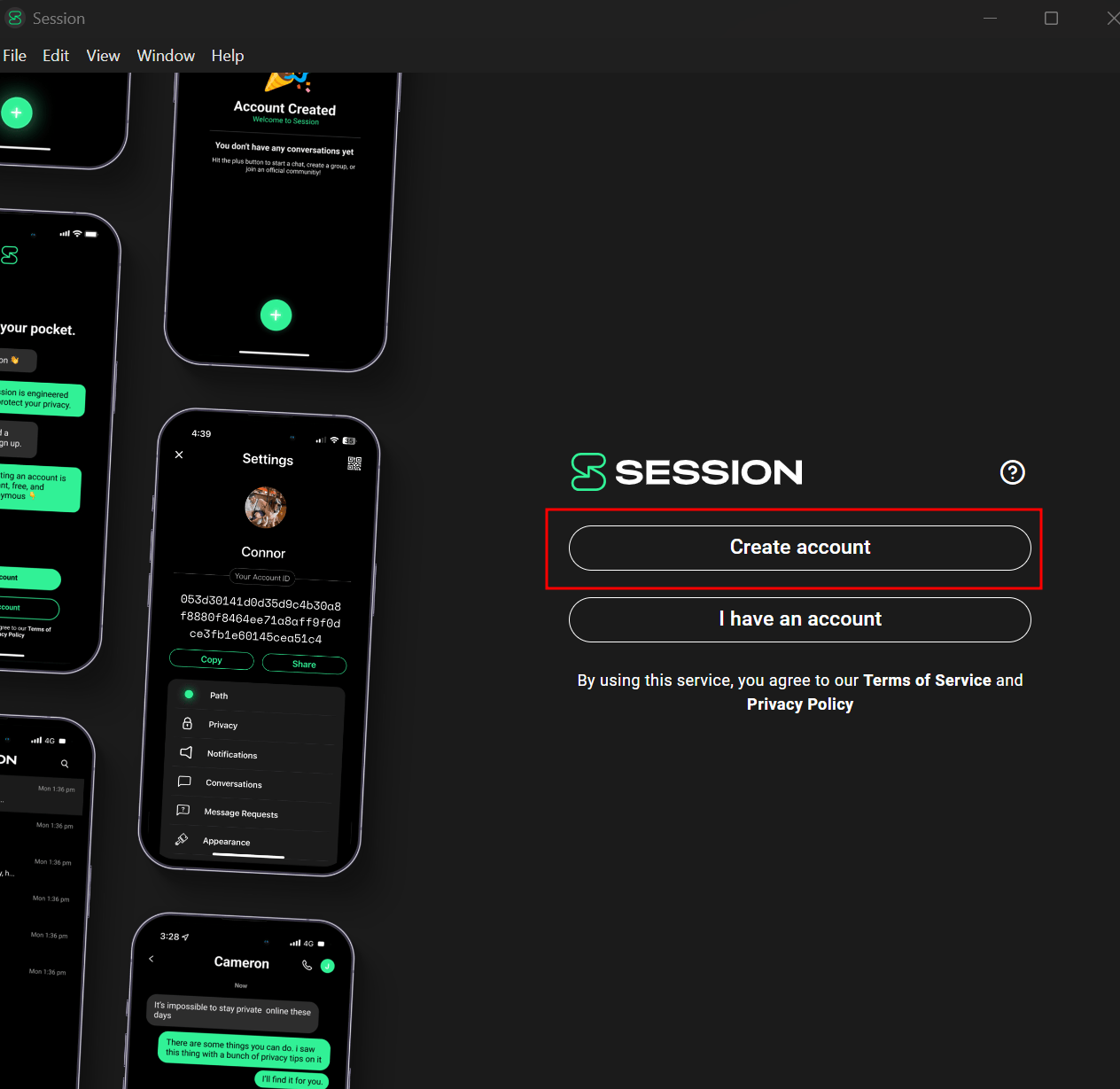
This security-focused article describes SimpleX Chat as a privacy-focused messaging network that keeps profile and contact information hidden from its servers, using proprietary protocols designed with privacy as a core principle. It recommends SimpleX for lightweight, decentralized communication and anonymous use without central servers, while noting it may lack some advanced features compared to more established platforms.
Decouvrez les Meilleures Applications de Messagerie Securisee en 2025
Ca Marche Ca Fonctionne
This French-language guide on secure messaging apps describes SimpleX Chat as minimalist while offering advanced features, particularly its incognito mode that generates random identifiers for each conversation. SimpleX receives less detailed coverage than Signal, which is positioned as the top security leader in the article.
SimpleX Chat publie sa version 6.4.3 : une messagerie privee toujours plus aboutie
SysKB
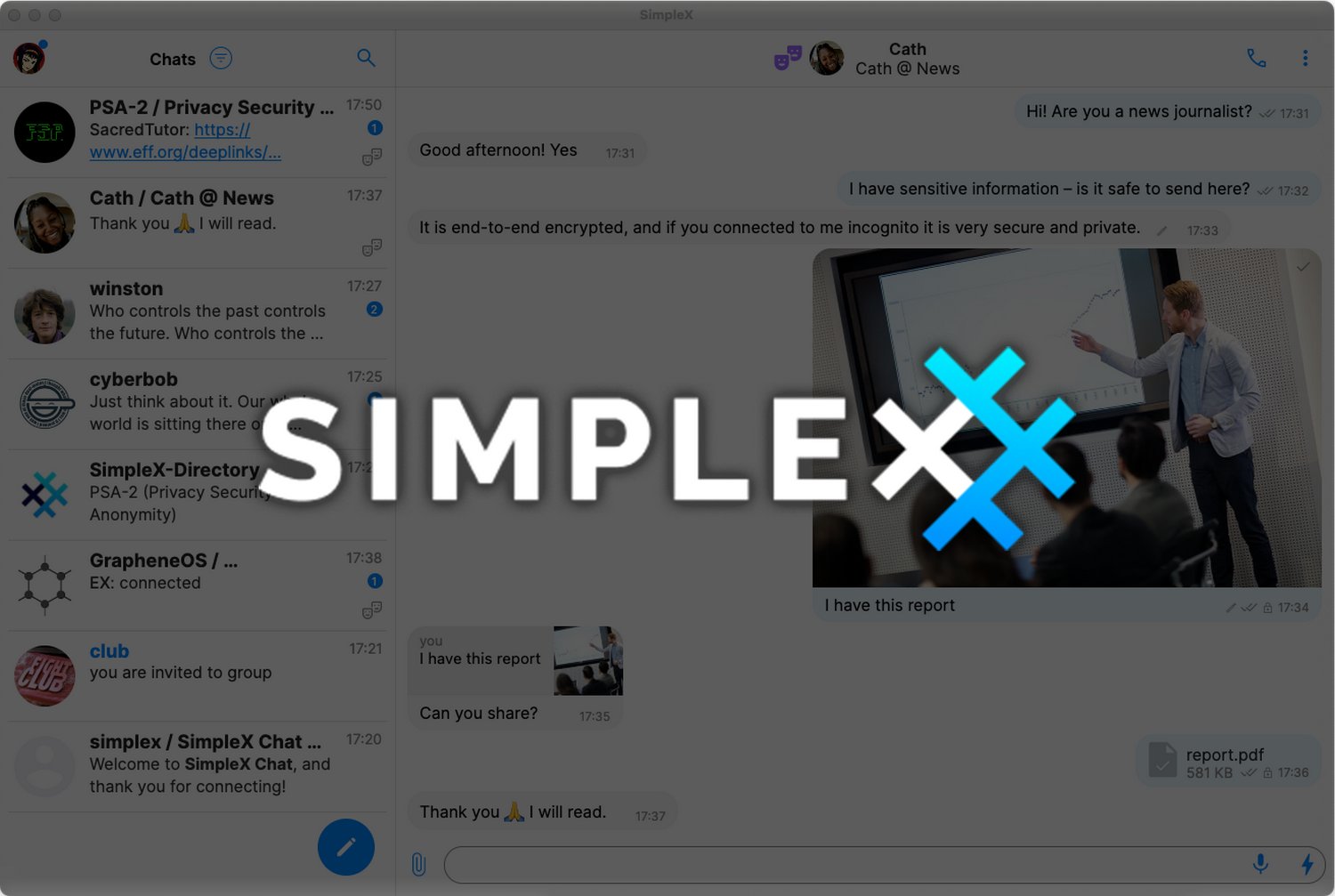
This French tech site covers SimpleX Chat version 6.4.3, noting new features including bot support via commands, hypertext links in Markdown, and automatic removal of link tracking parameters. The article also mentions the project's $1.3 million funding round backed by Jack Dorsey in August 2024.
Alternativa WhatsApp i Telegram: polnyj gid po detsentralizovannym chatam
SecurityLab.ru
This Russian guide to decentralized chat alternatives describes SimpleX as using temporary anonymous message queue identifiers instead of traditional accounts, with no phone numbers or emails required. It notes the unfamiliar interaction model may confuse newcomers and potential delivery delays exist, but ranks SimpleX highly for anonymity and metadata protection.

SimpleX: La Rivoluzione della Messaggistica Privata
aiutocomputerhelp.it
This Italian article describes SimpleX as a radical messaging platform that eliminates permanent user identities entirely. Communication occurs through encrypted invitation links creating isolated, non-traceable channels, with no central server knowing anything about users and the ability to self-host relay servers.
Top 10 Nen Tang Nhan Tin Bao Mat Thay The Telegram Tai Viet Nam 2025
TuDongChat
This Vietnamese article lists SimpleX as the first decentralized, open-source messaging platform that eliminates user identification entirely, requiring no phone number, email, or personal identifier. It positions SimpleX as the highest-security option among Telegram alternatives for Vietnamese users, ideal for journalists, activists, and anyone requiring no digital footprint.

Paskoocheh / ASL19
Paskoocheh, a platform providing circumvention tools for Iranian users, offers SimpleX Chat for Android download. The listing describes SimpleX as a privacy-focused messenger with end-to-end encryption, decentralized architecture, and anonymous communication capabilities, noting it is particularly useful for civil activists, journalists, and anyone requiring confidentiality.
Qu'est-ce que SimpleX Chat
No Trust Verify
This French-language article from NoTrustVerify describes SimpleX Chat as the first messaging platform with no identifiers that respects privacy by default. It explains the decentralized architecture using message queues instead of user accounts, and highlights features like Incognito Mode, Live Messages, and separate Chat Profiles for different conversations.

SimpleX Chat - wu xu yong hu biao shi fu de qu zhong xin hua yin si xiao xi ying yong
Kaiyuanapp.cn
This Chinese open-source app directory describes SimpleX as a decentralized privacy messaging app that operates without any form of user identifiers. It highlights the SimpleX Messaging Protocol with relay servers that only store encrypted messages temporarily, self-hosting capability, disappearing messages, and anonymous group chats, while noting limitations in voice/video calling, occasional messaging delays, and high Android battery consumption.
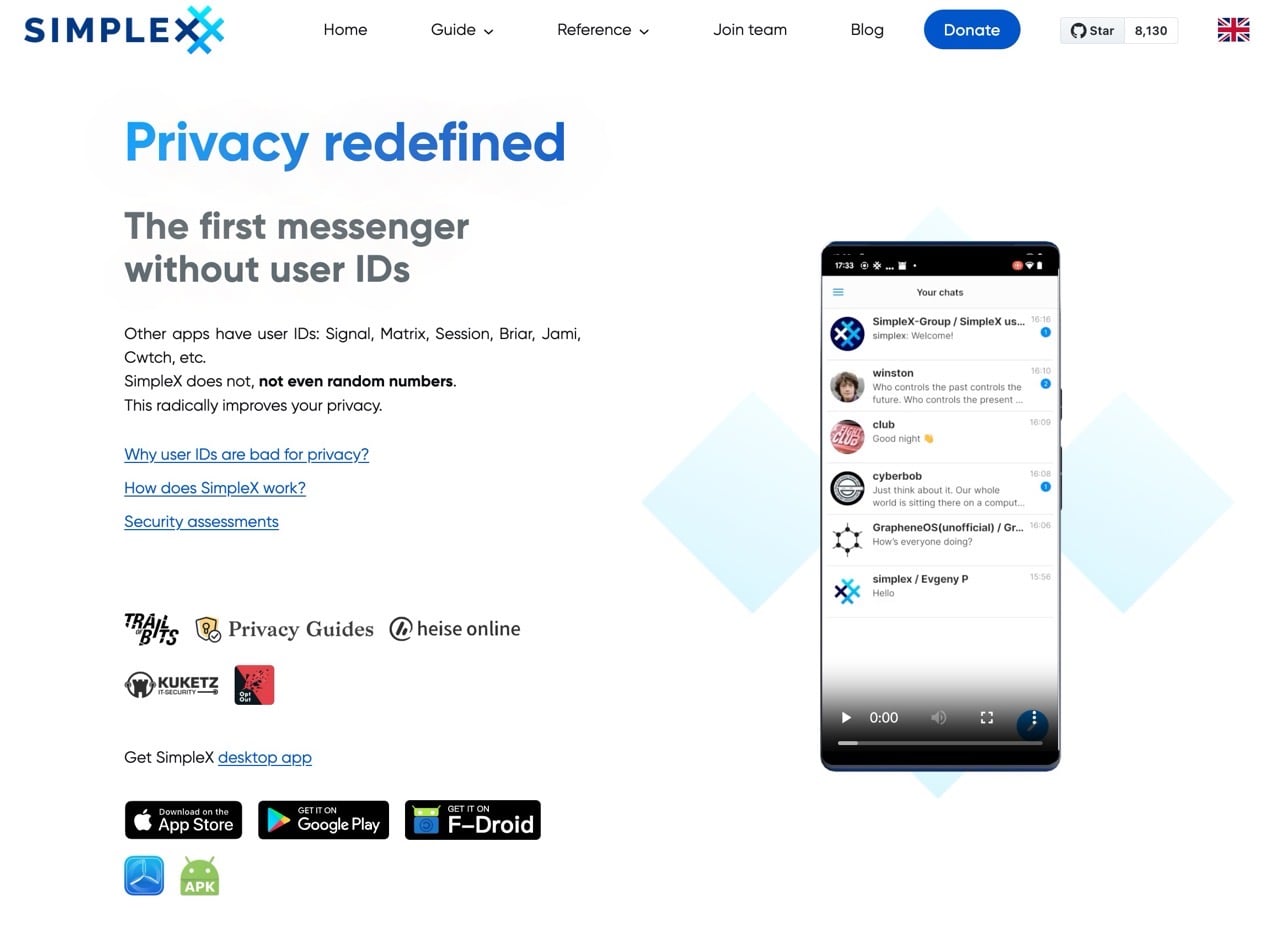
Free.com.tw
This Taiwanese article introduces SimpleX as a privacy-focused messaging app launched in 2020 that requires no phone number or email, using decentralized networking instead of a single server. It notes the spam prevention benefit of link-based contact sharing and mentions the desktop version requires smartphone pairing, while flagging the small user base and lack of Traditional Chinese localization.
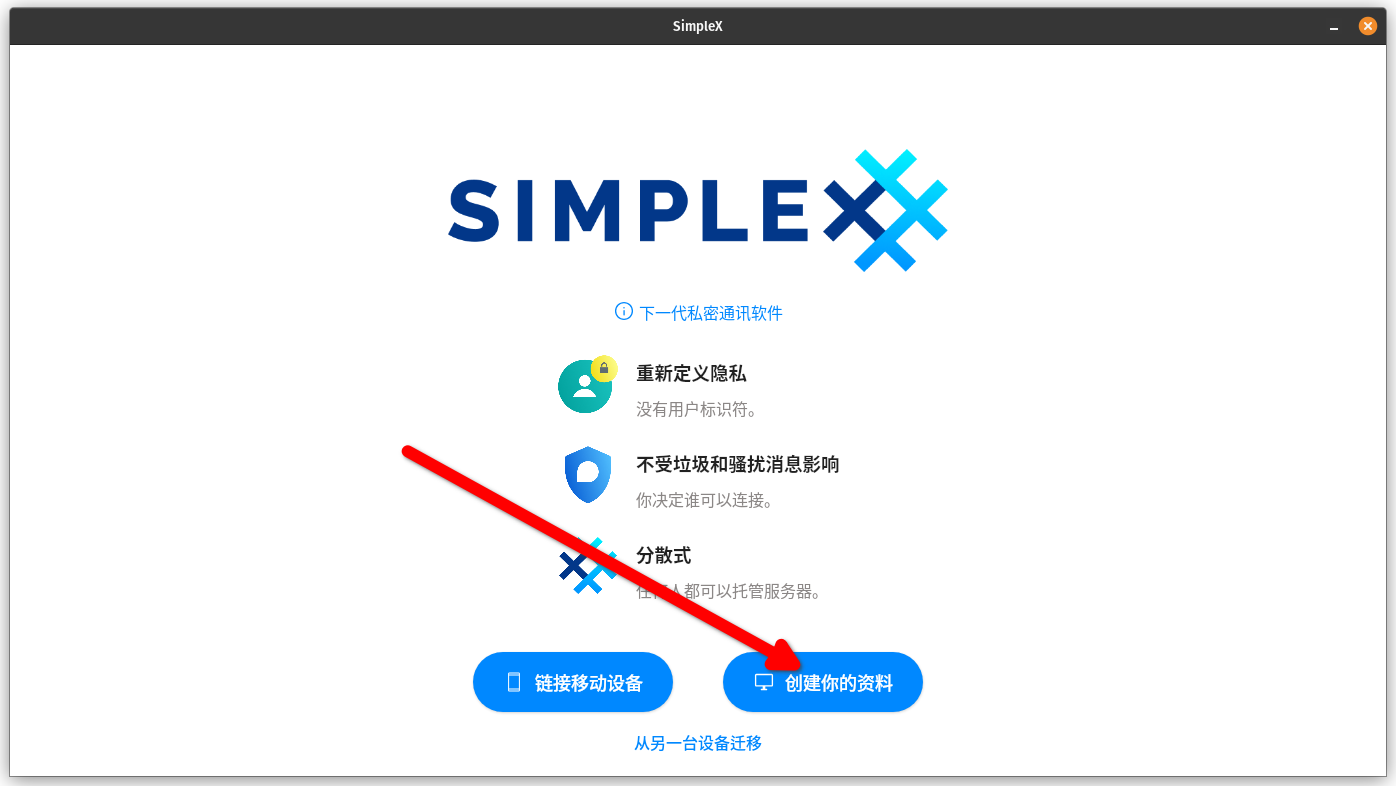
SimpleX Chat jian yi jiao cheng di er dan
BHB Community
This Chinese tutorial covers SimpleX Chat setup and advanced features including post-quantum encryption, database password creation, server provider selection, security code verification, and group management. It notes SimpleX has no message recall function except for group admins, voice/video calls require VPN access, and file sizes are limited to 1GB.


Chat securizat si descentralizat, fara numar de telefon sau conturi, cu aplicatia de mesagerie SimpleX Chat
Romica Prihor
This Romanian blog post promotes SimpleX as a revolution in secure and decentralized messaging without phone numbers or accounts. It provides installation instructions for Android, iOS, and desktop, and covers group management through invitation links with moderation features, positioning SimpleX as ideal for those prioritizing communication privacy without compromises.
Nay-dobrite prilozheniya za kriptiran chat na 2025
Questona.com
This Bulgarian article on encrypted chat apps describes SimpleX as suitable for additional privacy, claiming greater anonymity than Briar because it uses no ID numbers. It notes user names change constantly in group chats and supports disappearing messages, but flags an extremely small user base and server reliability issues as significant practical drawbacks.

Opt Out Podcast
This Opt Out Podcast episode features Evgeny from SimpleX and Dan Keller from Flux discussing improvements to SimpleX Chat, including quantum-resistant encryption and privacy-preserving content moderation. The conversation also covers a new chat relay approach developed collaboratively between SimpleX and Flux, along with SimpleX's network operator monetization plans.

SimpleX Chat - Whatsapp libertario
Paranoia
Tuta Blog
Tuta designates SimpleX as the "best decentralized" WhatsApp alternative, highlighting that it requires no phone number or ID for registration and uses a decentralized network where each chat creates unique fingerprints to prevent connection mapping. The article calls it a must-try for those whose personal well-being and safety demand a greater amount of privacy, while noting its smaller user base compared to competitors.
Proton Blog
Proton's blog highlights SimpleX Chat's radical privacy approach of requiring no phone number, email, or username to create an account, using one-time invitation links instead of a central user directory. The article notes that SimpleX encrypts both messages and metadata and has undergone independent security audits, but faces limitations including a small user base and reports of misuse by extremist groups.
SimpleX Chat - Datenschutzfreundlicher Messenger fur maximale Privatsphare
Digital Unplug Schweiz
This German-language privacy site describes SimpleX Chat as an open-source messenger that completely eliminates user IDs and stores data locally on devices. It details the Double-Ratchet Protocol encryption, temporary connection links, decentralized proxy server routing with optional Tor integration, and cross-platform availability across iOS, Android, Windows, macOS, and Linux.
ID不要の匿名メッセージアプリ「SimpleX Chat」の使い方
VPN Taizen
This Japanese setup guide describes SimpleX as having the highest privacy protection among messaging apps, explaining its encrypted queue system where servers cannot know who communicates with whom. The reviewer provides detailed instructions for profiles, contact management, and Tor integration, but criticizes the interface as "terrible" with confusing design and iOS stability issues.
Daniel's Blog
This blog post walks through self-hosting a SimpleX SMP server with Traefik and Docker after the author abandoned WhatsApp over privacy concerns. It highlights SimpleX's invite-link-based connections and decentralized relays that do not reveal participant information, while honestly noting the desktop app requires an active smartphone connection and lacks a web interface.
Wo yong le yi zhou ni ming liao tian gong ju, fa xian zhe 3 ge cai shi zhen zheng de an quan
Zhihu
This Chinese article reviews three anonymous messaging tools - Session, SimpleX Chat, and TWT - from a week-long hands-on test. SimpleX is praised for its zero-metadata design where even the server cannot know who is communicating, with support for text, voice, and groups, but criticized for requiring manual connection-code sharing and a developer-oriented interface that makes onboarding friends difficult.
TorGuard
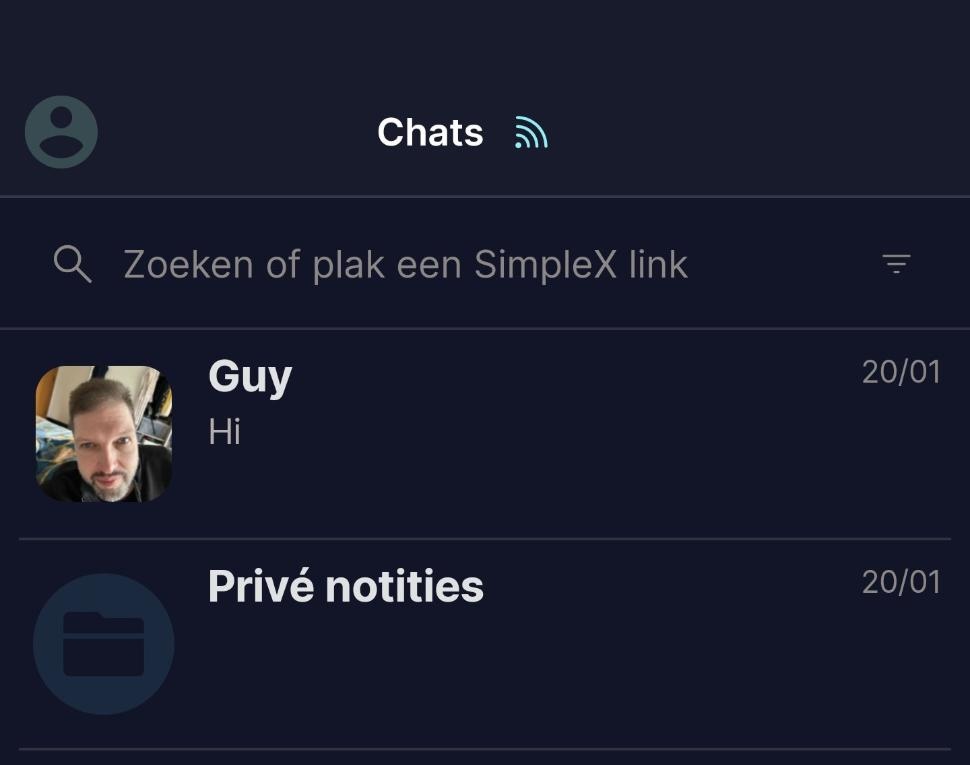
Taurix IT
Taurix IT offers managed SimpleX Chat hosting services, including hosting their own SMP servers in separate locations and providing setup assistance for clients who want to self-host. The page emphasizes that SimpleX protects metadata which competitors like Signal and WhatsApp fail to adequately safeguard, making it particularly valuable for whistleblowers, journalists, and activists.
Taurix IT
This repository contains a Python-based customer service bot for SimpleX Chat that joins a specified control group and announces newly created customer chats. Control group members can then use commands to join customer conversations, automating the connection between customer service representatives and incoming inquiries.

Freedom Lab NYC
FreedomLab provides a tutorial for self-hosting a SimpleX SMP (Simple Messaging Protocol) server on a Debian/Ubuntu VPS with Tor support. The guide covers installation steps for running your own private, decentralized messaging relay server as part of the SimpleX network.
Monerica
This Monerica directory page lists several Monero-focused SimpleX Chat communities spanning multiple languages and regions, including groups for Monero discussion in Slovenian, German, Italian, and Hebrew. It includes an automated bot that sends hourly Monero price updates via SimpleX. Monerica is established in 2022.

SplinterCon
The SplinterCon anti-censorship project page describes SimpleX as a decentralized messenger that operates without user IDs, using end-to-end encryption for messages and file transfers. It highlights that SimpleX can run on the Tor network and allows users to deploy their own servers, with messages routed through servers that can operate without persistence.

Sofwul
This Czech e-commerce site lists SimpleX as one of several encrypted messaging contact options for reaching their customer support, alongside Threema, Session, Jami, and Teleguard.
NBTV / Ludlow Institute
The Ludlow Institute (NBTV) offers SimpleX as one of several community communication platforms alongside Signal and Element, describing it as an end-to-end encrypted messaging app for real-time discussions with other NBTV community members.
Taurix IT
TellMe is a notification system that monitors events (completed processes, server uptime, etc.) and sends alerts through SimpleX Chat or Matrix via websockets. It supports custom messages, process monitoring, periodic command output watching, and host ping availability tracking.
BitList.co
This Bitcointalk thread presents a notification bot for SimpleX Chat that monitors the forum for merit awards, mentions, quotes, specific users, topics, and keyword phrases. The developer notes that due to SimpleX's decentralized architecture, notifications may experience delays compared to Telegram alternatives, and data is stored for retry when users aren't connected.

nemental.de
This guide explains how to host a SimpleX SMP server as a Tor hidden service using Docker containers, making the relay accessible only through .onion addresses. It notes that while SimpleX already has strong privacy by design, adding Tor hides the server's public IP and eliminates DNS exposure, pulling the relay further out of reach of traditional tracking.

SimpleX-Themes
This community-maintained archive offers over 100 downloadable SimpleX Chat themes with preview screenshots, ranging from dark modes (AMOLED Black, Dracula) to colorful designs (Aurora Sunset, Catppuccin, neon synthwave). It is an independent community project not affiliated with SimpleX Chat Ltd, and users can submit their own custom themes.
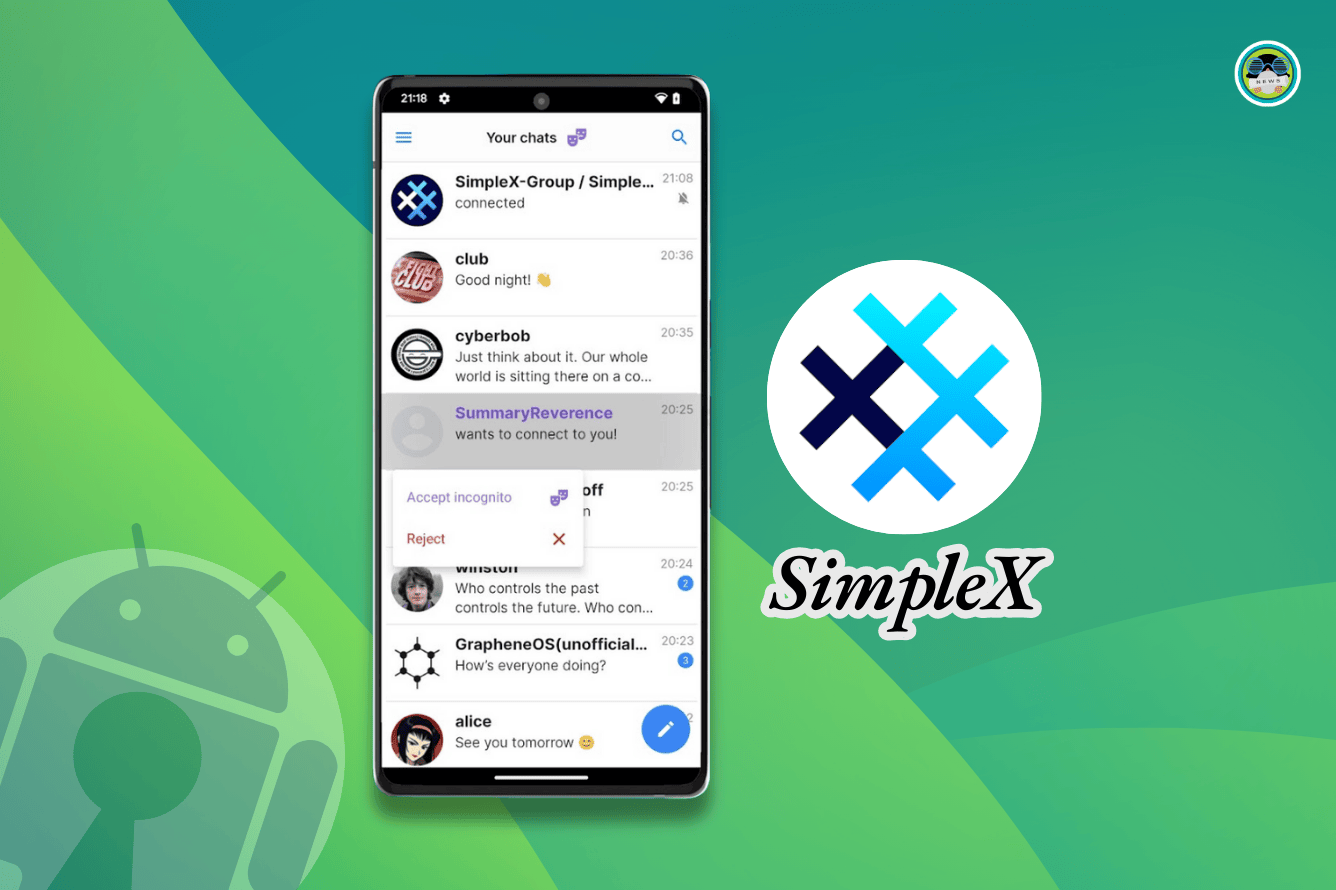
It's FOSS
It's FOSS presents a highly positive experience with SimpleX Chat, praising its no-ID signup, quantum-resistant encryption, and intuitive messaging features. The main drawback noted was buggy video calls with audio and quality issues, but overall the reviewer concludes SimpleX sets a new standard for secure communication.

Estas son las aplicaciones de mensajeria mas seguras segun una criminologa
Noticias de Navarra
This Spanish news article reports that criminologist Maria Aperador highlights SimpleX as the most secure messaging application, citing its lack of user identifiers (not even random ones), end-to-end encryption, and impossibility of data tracking. She emphasizes that SimpleX contains no metadata and the app doesn't know who you are or where messages originate.

Juraj Bednar
Juraj Bednar chose SimpleX as his preferred solution for sending encrypted notifications between programs and mobile devices, valuing its lack of account creation requirements and absence of spam. He uses helper functions to send messages and files from scripts, while noting SimpleX still has bugs and does not guarantee delivery if the program finishes before transmission completes.

SimpleX: mensajeria con total privacidad
VeraSoul
This Spanish-language article presents SimpleX Chat as a highly secure messaging app that requires no user IDs, unlike Telegram or Signal. It highlights the app's use of its own SMP protocol, end-to-end encryption, decentralized architecture, and the option for users to choose between SimpleX servers or self-host alternatives.

Мессенджер для параноиков. Настраиваем SimpleX Chat
Первый отдел
Анонимный мессенджер - обязательный стандарт для каждого человека
Habr
This Russian-language article argues that anonymous messaging with strong encryption should be a standard necessity for everyone, as governments increasingly surveil communications. SimpleX Chat is highlighted as innovative for being the first messenger without user identifiers, using temporary anonymous paired identifiers for each connection that make it impossible to correlate anonymous profiles with real identities.
Seguridad en servicios de mensajeria instantanea
Colectivo 406
This Spanish security guide describes SimpleX Chat as using unidirectional message queues with end-to-end encryption including post-quantum algorithms, where servers act only as message bridges with minimal knowledge. It notes SimpleX is fully self-hostable unlike Signal, but acknowledges the complex changing queue addresses make maintaining long-term contacts more difficult.

SimpleX: Gruppenchat-Funktion im Praxistest
Kuketz IT-Security Blog
German privacy blogger Mike Kuketz documents significant performance issues with SimpleX's group chat functionality, including substantial message delays where one message sent at 19:39 arrived the next day at 11:50. The founder acknowledged that groups were never designed for more than 50 users, and the article concludes SimpleX is unsuitable for group chats exceeding that limit.

텔레그램 대안 앱으로 몰려가는 이용자들
eKoreaNews
This Korean news article reports on users flocking to Telegram alternatives, positioning SimpleX as the first messenger without user IDs. It notes SimpleX's decentralized architecture and mentions its early funding support from Jack Dorsey, while contextualizing the migration trend against Telegram's policy changes allowing authorities access to user data.
SimpleX Chat, 개인 정보 보호에 최적화된 채팅 앱, 텔레그램 사용자들이 떠나는 이유
Billionnapkin
This article frames SimpleX as a privacy-optimized alternative to Telegram, arguing users are migrating due to Telegram's changed data access policies following CEO Pavel Durov's legal issues. The tone is promotional but balanced, acknowledging concerns about potential misuse while endorsing SimpleX for journalists, activists, and privacy-conscious professionals.

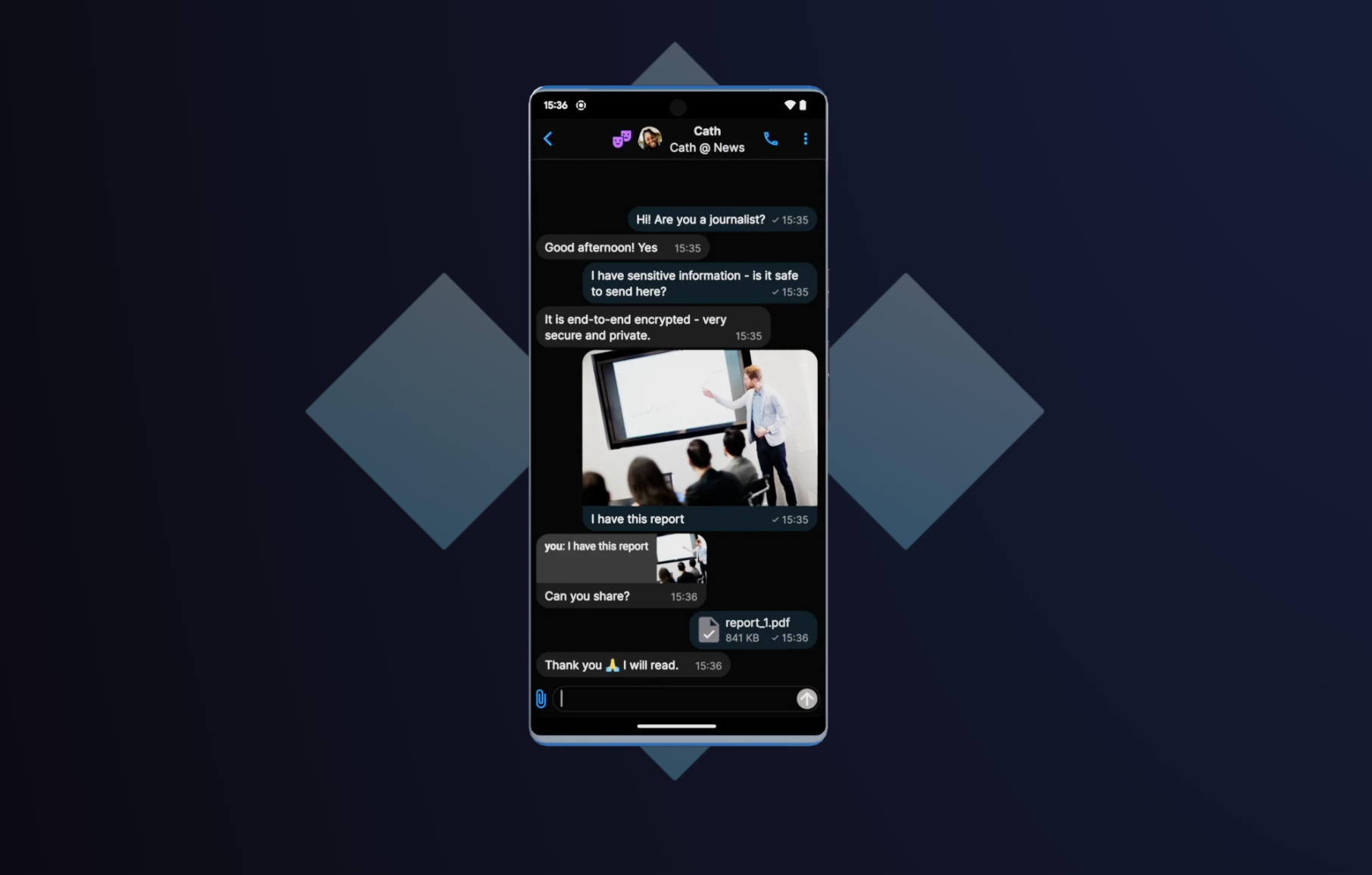
Чат SimpleX с открытым исходным кодом преуспел там, где Telegram потерпел неудачу
Notebookcheck Russia
This Russian-language Notebookcheck article highlights how SimpleX Chat addresses privacy concerns that Telegram failed to handle, including not requiring phone numbers, using one-way onion routing, allowing users to select their own servers, and providing end-to-end encryption with local device encryption. Unlike Telegram, which made changes after government pressure, SimpleX maintains stronger anonymity protections.
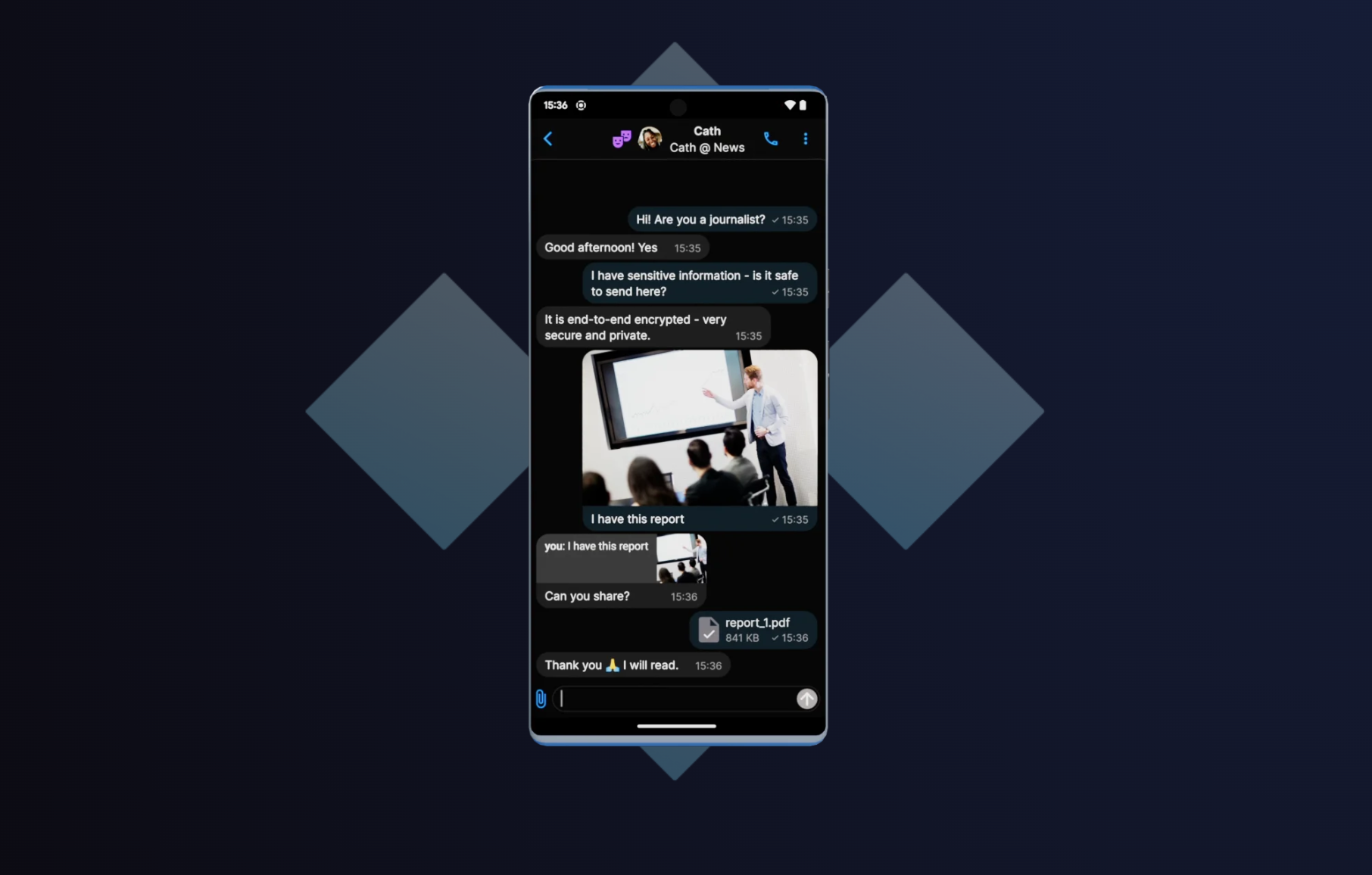
开源 SimpleX Chat 成功弥补了 Telegram 的不足
Notebookcheck China
This Chinese Notebookcheck article argues SimpleX succeeds where Telegram failed on privacy. It highlights that SimpleX requires no phone numbers, uses incognito mode with auto-generated usernames, employs one-way onion routing, and allows users to set up their own servers. The article notes unlimited group sizes but acknowledges SimpleX currently lacks widespread adoption.
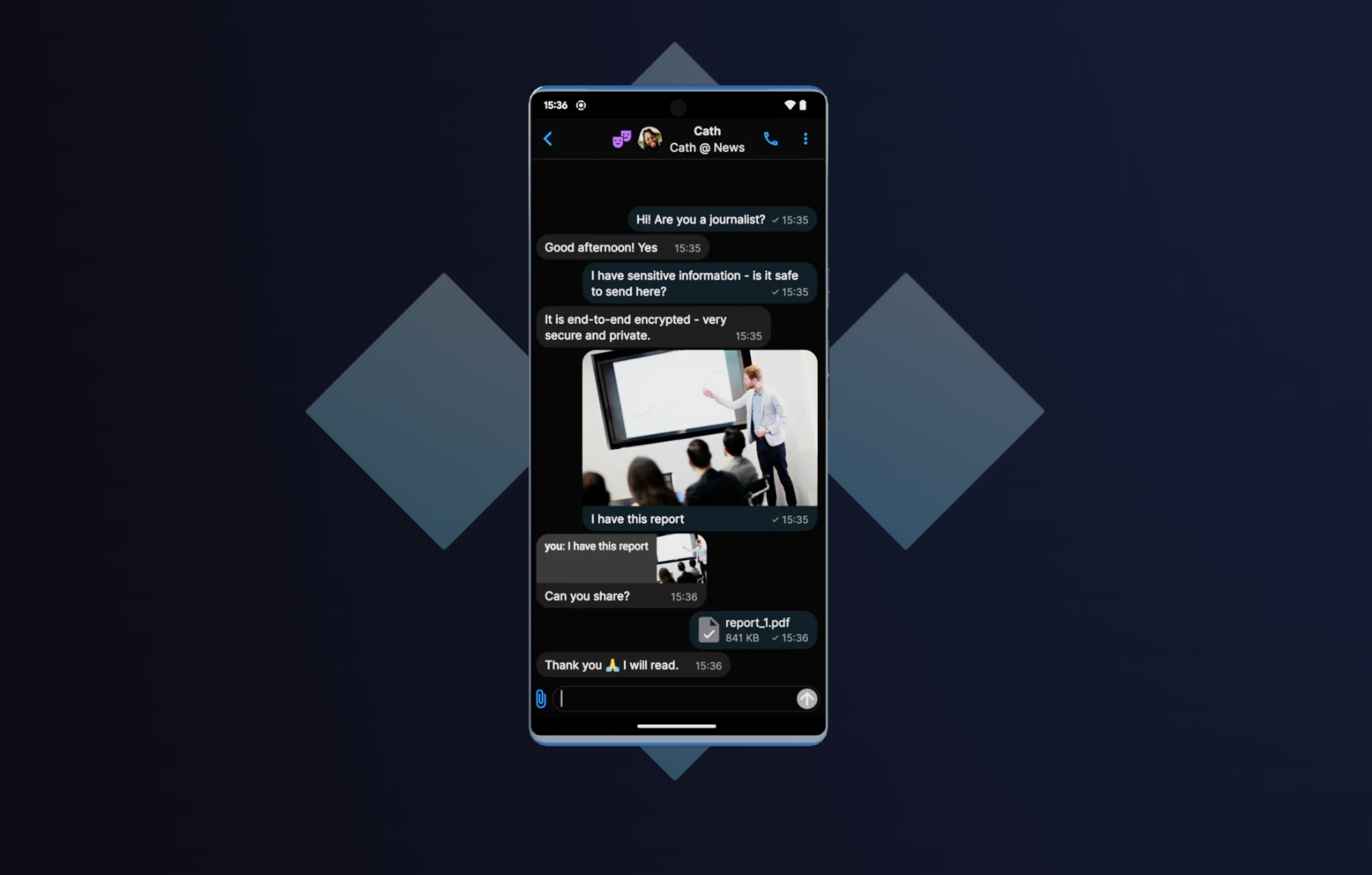
Notebookcheck
Notebookcheck argues that SimpleX Chat addresses privacy failures inherent in Telegram, highlighting that SimpleX requires no phone number, uses end-to-end encryption with onion routing, and allows users to select their own servers. The article notes that SimpleX operates in incognito mode by default and that even SimpleX itself cannot determine where messages originate.

NoBs Bitcoin
No BS Bitcoin covers SimpleX Chat v6.1, which enhances call functionality with camera activation and screen sharing from the desktop app during voice calls. The release also resolves iOS notification delivery problems, improves connectivity, and features a redesigned conversation layout with faster message operations.
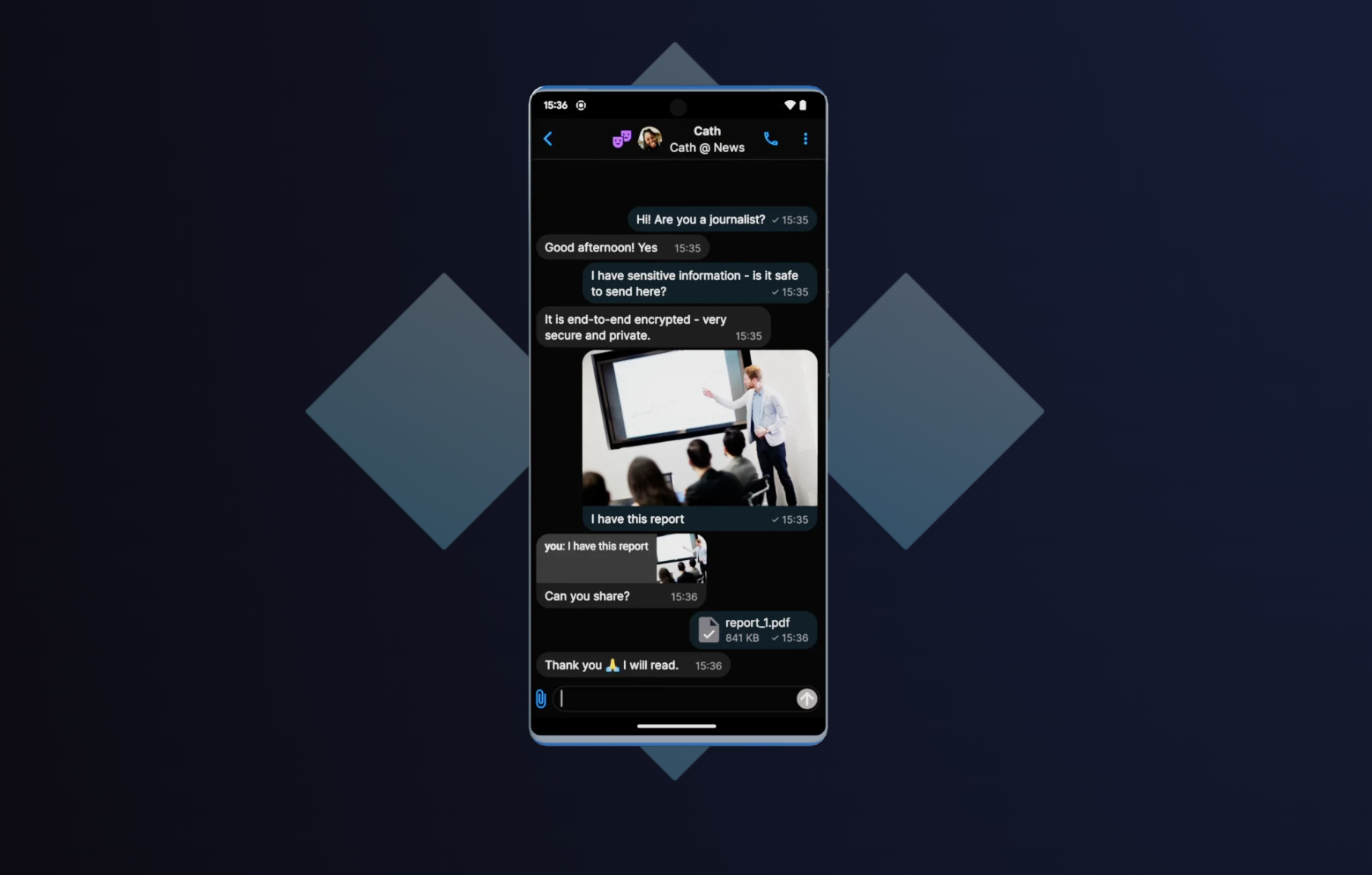
O SimpleX Chat de codigo aberto tem sucesso onde o Telegram falhou
Notebookcheck Portugal
This Portuguese Notebookcheck article contrasts SimpleX with Telegram, emphasizing that SimpleX does not require phone numbers for registration, uses incognito mode and one-way onion routing, and offers end-to-end plus local device encryption. It positions SimpleX's open-source, decentralized approach against Telegram's conflicts with government agencies.

SimpleX Chat - O Portal Oculto da Privacidade
Paranoia
Viszlat Telegram, udvozollek SimpleX!
HUP.hu
This Hungarian article shares a user's year-long experience with SimpleX Chat, praising that it requires no email, phone number, username, or password to register. The author describes the SimpleX address system, the Directory Bot for finding public groups, and notes the tradeoff that deleting the app without a database backup means permanently losing your profile and all contacts, while also referencing the Wired article about neo-Nazis on SimpleX and the SimpleX developer's response defending privacy.
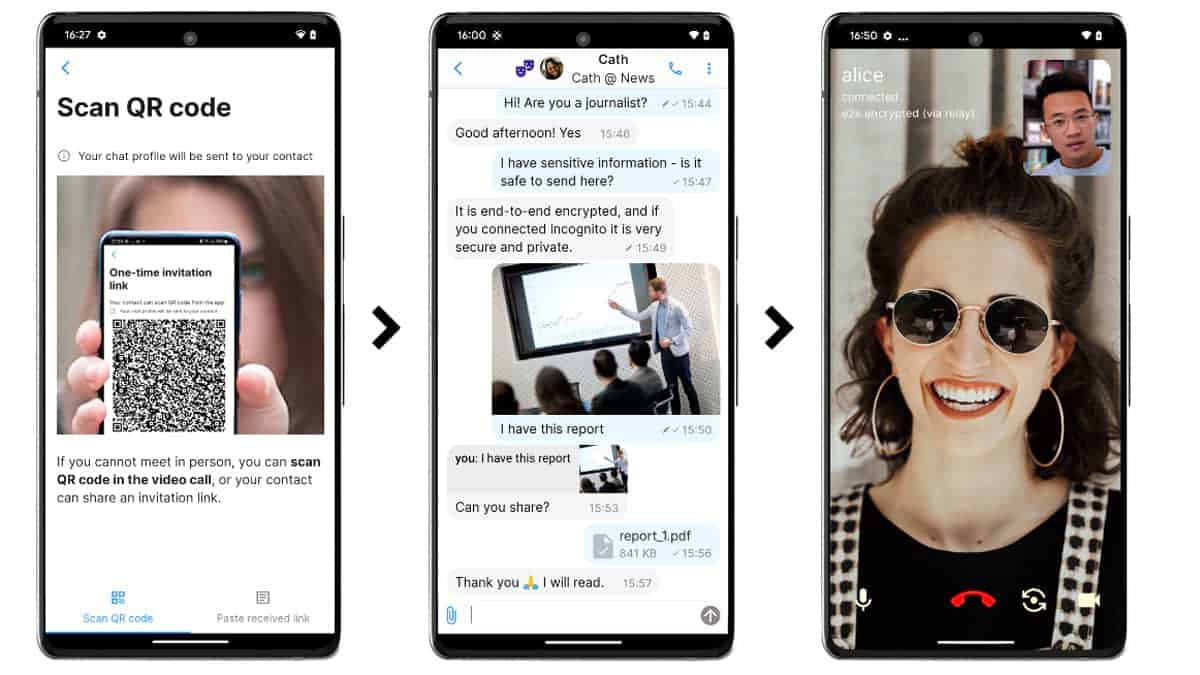
SimpleX Chat, un'app di messaggistica decentralizzata
Le Alternative
This Italian article reviews SimpleX Chat as a completely decentralized messaging app emphasizing anonymity and privacy, with no user IDs and end-to-end encrypted messages that remain on servers only until delivery. It notes support for audio/video calls, message editing, and self-hosted servers, while flagging drawbacks like high battery consumption and account recovery difficulties without backups.

Alternativy Signal i Telegram: kakoj bezopasnyj messendzher ispol'zovat' teper'?
hi-tech.mail.ru
This Russian tech review highlights SimpleX's complete anonymity through having no telephone numbers or identifiers, and describes its support for audio/video calls, file transfer, disappearing messages, and personal relay servers. It notes all information is stored exclusively on user devices, with messages only temporarily held on relay servers during delivery.

SimpleX i Matrix to najlepsze komunikatory. Kropka.
Programista Dla Pasji
This Polish article evaluates multiple messengers, praising SimpleX for its decentralization where servers function merely as message relays, requiring no personal data. However, the author ultimately chooses Matrix over SimpleX for daily use due to Matrix's superior multi-device support, while acknowledging SimpleX's elegant simplicity and decentralized design.
Detsentralizovannyye messendzhery: vybiraem samyj bezopasnyj sposob obshcheniya
SecurityLab.ru
This Russian security analysis categorizes SimpleX Chat as a decentralized and anonymous messenger prioritizing minimalism and maximum security. It notes SimpleX provides a high level of anonymity and eliminates metadata exposure, but acknowledges its restricted functionality and relatively low user awareness.

Bratya Signal. Vybiraem iz pyati naibolee privatnykh i zashchishchyonnykh messendzherov
Xakep.ru
This Russian security magazine calls SimpleX "the most interesting messenger in this selection, and also the most mysterious." The article highlights its anonymous registration requiring no phone number, federated architecture allowing user-hosted relay servers, and modern functionality including audio/video calls and disappearing messages.

Fen xiang ji ge bi dian bao Telegram an quan 100 bei de duan dui duan jia mi kai yuan liao tian ruan jian
V2EX
This Chinese V2EX forum post recommends SimpleX as having the highest encryption strength among reviewed E2EE messaging apps, highlighting that unlike Session's fixed IDs, SimpleX eliminates even fixed identifiers entirely. It notes SimpleX uses temporary anonymous pairing identifiers, creates independent fingerprints per conversation, supports Tor integration, and can be self-hosted.
Fen xiang ji ge bi dian bao Telegram an quan 100 bei de kai yuan liao tian ruan jian
Matters.town
This Chinese article recommends several end-to-end encrypted open-source chat apps that are far more secure than Telegram, written in the context of the Telegram founder's detention in France. It explains end-to-end encryption and mentions Session and SimpleX among the recommended alternatives that protect message content from being readable even by the relay servers.

NoBs Bitcoin
No BS Bitcoin reports that SimpleX Chat secured $1.3 million in pre-seed investment led by Jack Dorsey and Asymmetric Capital Partners. The v6.0 release includes protocol improvements reducing the messages needed for users to connect by half, a redesigned mobile interface, image blur options, and improved moderation tools supporting up to 20 message selections.
匿名チャット対決!Session対SimpleX
Kusaimara Blog
This Japanese blog post compares Session and SimpleX across recognition, usability, and anonymity. It notes SimpleX avoids user IDs entirely using unique URLs for connections but requires manual Tor activation. The author concludes both tools suffer from limited adoption, arguing that messaging apps require network effects to be practical.
Reclaim the Net
Reclaim The Net covers SimpleX Chat v5.8's private message routing protocol where the forwarding relay is chosen by the sender and the second by the recipient, ensuring neither party can observe the other's IP address. The developers rejected embedding Tor due to latency and metadata correlation issues, instead building their own solution that provides IP protection by default.

NoBs Bitcoin
No BS Bitcoin covers SimpleX Chat v5.8's introduction of private message routing, described as a 2-hop onion routing protocol inspired by Tor that protects both users' IP addresses and transport sessions. The update also adds file reception protections from unknown servers, chat themes with wallpapers, and improved group permissions for admins.

Passo a passo do aplicativo SimpleX Chat
Alex Emidio / Substack
This Portuguese step-by-step guide covers SimpleX Chat's backup and data recovery features, including database encryption with user-created passwords and export of encrypted backups. It emphasizes the local-first approach where contacts and messages are stored on the user's device, and warns that the database password cannot be changed if lost.

巷で話題のSignalやSessionではなくSimpleXをおすすめする理由
vpn53049 / Ameblo
This Japanese blog post advocates for SimpleX over Signal and Session, citing its per-connection one-time IDs, forward secrecy, and post-quantum encryption. The author criticizes Session for lacking forward secrecy and using fixed permanent IDs, and questions Signal's leadership integrity, concluding SimpleX addresses privacy gaps present in both alternatives.
Reclaim the Net
Reclaim The Net reports that SimpleX Chat launched a beta version of quantum-resistant encryption, implementing post-quantum cryptography with an improved quantum-resistant double ratchet algorithm. The article notes the use of fixed 16kb block sizes and lossless compression to prevent traffic analysis, with the feature currently optional for users.
NoBs Bitcoin
No BS Bitcoin reports that SimpleX Chat v5.7 introduced quantum-resistant end-to-end encryption for all contacts and message forwarding without revealing the source. The article notes planned third-party security audits and the team's request for community donations to help cover audit costs exceeding $50,000.
SimpleX - komunikacijski klijent za stvarno sigurnu i anonimnu komunikaciju
Bug.hr
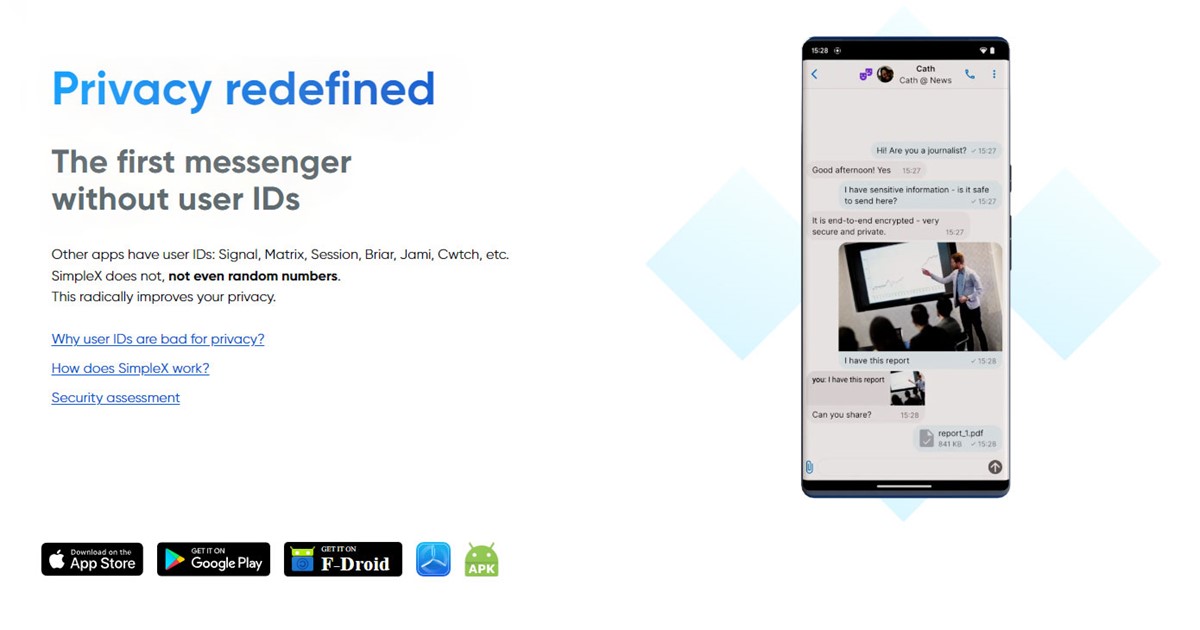
This Croatian tech publication describes SimpleX as a highly secure, decentralized messaging app using Double Ratchet encryption with no user identifiers and local-only data storage. It highlights anonymous profiles, self-destructing messages, voice and video calls, and self-hosting capability, with one commenter noting it is "really top for privacy."
Групповые P2P-чаты и первый мессенджер без ID
Habr / GlobalSign
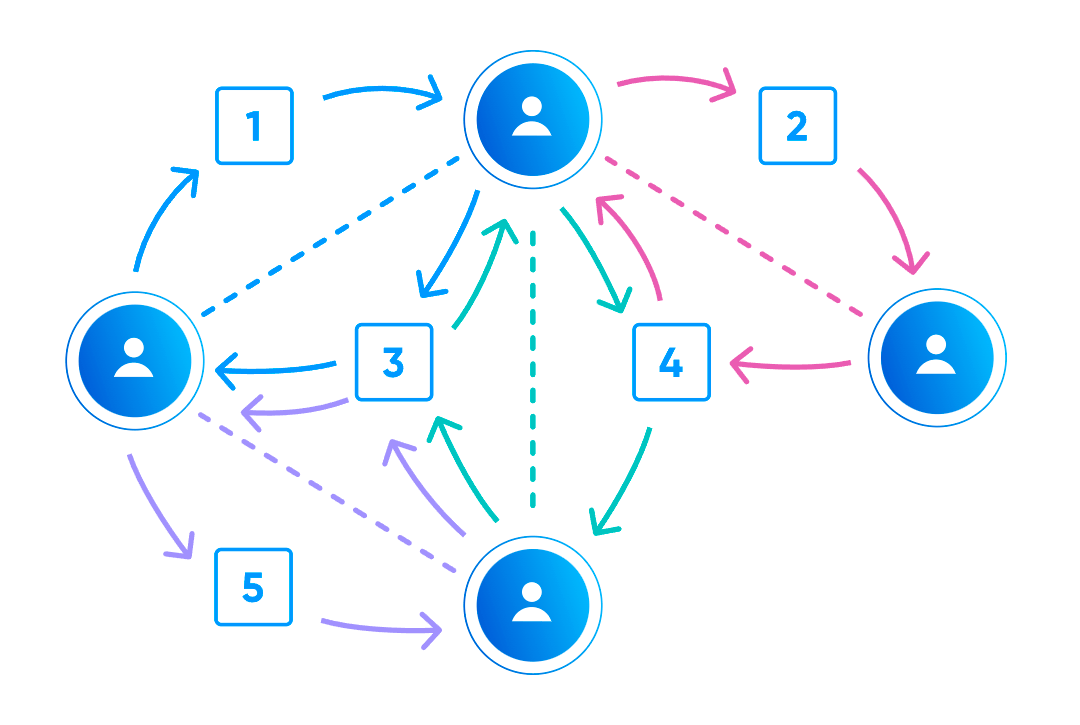
This Habr article examines group P2P messaging and SimpleX as the first messenger without user IDs, using temporary anonymous paired message queue identifiers unique to each connection. It details incognito mode, decentralized storage, dual-layer encryption, and Tor compatibility, contrasting SimpleX's approach with all existing messengers that rely on some form of user identification.

SimpleX Chat:一个私人且加密的开源通讯工具,没有任何用户 ID
Ababtools
This article describes SimpleX Chat as an open-source messaging platform that does not rely on any user identifier, not even random numbers. It highlights Double Ratchet encryption, multiple chat profiles including hidden ones, encrypted voice messages and audio/video calls, secret group chats, and portable encrypted databases, with availability across Android, iOS, and desktop.

Entrevista con el autor de SimpleX Chat: la mensajeria mas segura por diseno
GatoOscuro
This Spanish-language interview with SimpleX founder Evgeny Poberezkin covers the project's approach to eliminating user identifiers, addresses concerns about government surveillance and backdoors, and discusses funding from Village Global without compromising independence. Poberezkin emphasizes that adoption, word-of-mouth promotion, and user donations are essential for the project's survival.
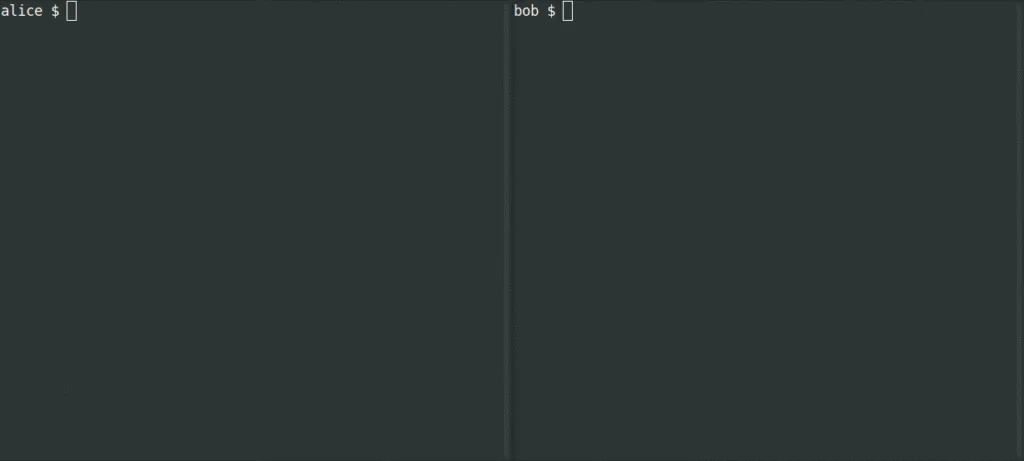
SimpleX, a rede de bate-papo que preserva a privacidade de metadados
Edivaldo Brito
This Portuguese article describes SimpleX as a decentralized, open-source chat network that preserves metadata privacy by using disposable relay nodes and assigning no user identifiers for message routing. It explains that SimpleX employs two layers of end-to-end encryption - double ratchet for forward secrecy and a second layer to protect metadata - along with unidirectional (simplex) message queues that combine the advantages of P2P and server-based architectures.
SimpleX e uma alternativa ao Telegram com foco na privacidade
Midia Segura
This Portuguese-language article presents SimpleX as a privacy-focused alternative to Telegram, noting increased user migration following Pavel Durov's arrest and Telegram's policy changes. It highlights SimpleX as the first messaging app without a user ID, email, or phone number, with backing from Jack Dorsey.

Simplex Chat - O primeiro mensageiro sem ID de usuario
Rafael Mesquita / TabNews
This Portuguese-language article highlights SimpleX Chat as a privacy-focused messenger that uses temporary anonymous pairwise message queue identifiers instead of user IDs, phone numbers, or usernames. It explains that this design prevents metadata correlation attacks and that user profiles are stored only on devices, with dual-layer end-to-end encryption and optional Tor connections.

SimpleX Chat: A Ferramenta Revolucionaria para Comunicacoes Privadas e ate Anonimas
Coach De Osasco
Rick Carlino
The author explores SimpleX Chat's bot-building capabilities using its CLI application with WebSocket support, finding the process remarkably straightforward and reminiscent of writing IRC scripts with a better UX. The article includes a functional TypeScript example demonstrating how to build chatbots through JSON commands, requiring minimal setup of just downloading an executable and connecting via WebSocket.
SimpleX Chat une messagerie sacrement privee
Siksik
SimpleX Chat: Une Nouvelle Application de Messagerie Instantanee
AEKONE

SimpleX Chat la app de mensajeria ultra privada que casi nadie conoce
RD CIPHER
SimpleX: mensajeria SIN identificadores
Elurk Informatica
Marius
This privacy-focused blog describes SimpleX as an open-source, decentralized instant messenger that lacks fixed user identifiers, requiring neither a phone number nor a username. However, the author withdrew their recommendation after SimpleX received venture capital funding from Jack Dorsey in August 2024, citing concerns about the investment's influence.
SimpleX Chat:无需身份识别的下一代安全通讯工具
Huluohu Blog
This Chinese article introduces SimpleX Chat as a uniquely private messaging platform that requires no phone number, email, or username of any kind, using shared links instead to establish connections. It highlights SimpleX's core advantages: true anonymity where even the servers cannot know who is talking to whom, end-to-end encryption, decentralized server architecture, open-source transparency, and innovative use of unidirectional message queues with rotating random receive addresses to resist network analysis.
Le 10 app di messaggistica piu sicure del 2024
Moyens I/O Italy

SIMPLEX: CHAT ANONIMO SEM TELEFONE E EMAIL / PRIVACIDADE ONLINE COM ULTRA ANIQUILACAO DE METADADOS
Leandroibov

Como usar o SimpleX chat privado sem identificacao
Prometheus HODL

Simplified Privacy
This messenger showdown compares Signal, Session, SimpleX, Matrix, XMPP, and Briar, positioning SimpleX as "most likely to grow" due to its corporate APIs. It recommends SimpleX specifically for users who want to hide their communications, while noting it is rated as most vulnerable to psychological phishing among the messengers compared.

Libre Self Hosted
This self-hosting directory describes SimpleX as the most private and secure chat platform, using pairwise per-queue identifiers instead of persistent user IDs. It notes the Trail of Bits security audit, AGPL-3.0 licensing, Haskell implementation, and Tor support, emphasizing that SimpleX protocols are and will remain open and in the public domain.
Seth For Privacy
In this privacy guide by Seth for Privacy, SimpleX is recommended as a key step in the privacy journey for its protection of both message contents and metadata. The author notes SimpleX has become his preferred messenger over Signal, primarily because it eliminates the phone number requirement, and he references a detailed podcast interview with SimpleX founder Evgeny.

iode Blog
This iode tech blog article on degoogling covers SimpleX as a decentralized messaging alternative using unidirectional simplex queues. It praises SimpleX's open-source end-to-end encryption and censorship resistance, but identifies significant limitations: a very small user base, no remote contact discovery, slower message delivery, no multi-device support, and total data loss if the device is lost without backups.
Сравнительный обзор защищенных мессенджеров
SecurityLab.ru
This Russian comparative review of protected messengers describes SimpleX as a decentralized platform targeting privacy-conscious users who prioritize anonymity. It notes SimpleX's strengths in avoiding phone numbers and tracking, but identifies fewer features compared to Telegram or Signal, a potentially confusing interface, and a smaller user community as drawbacks.
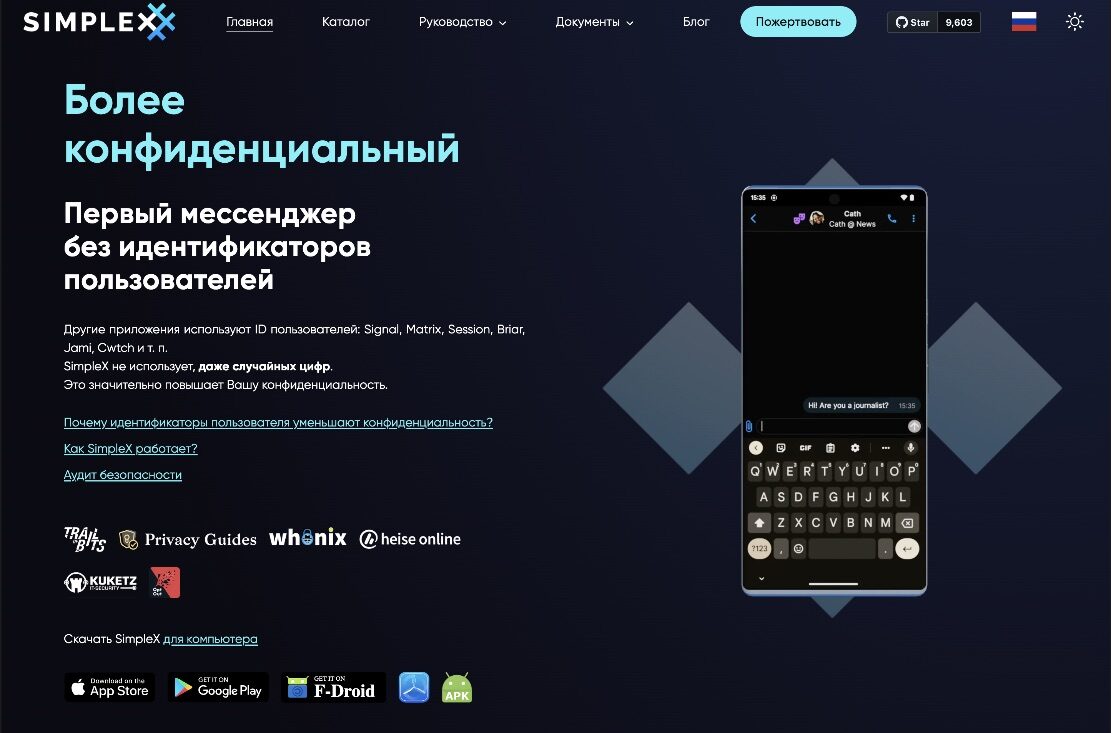
Обзор SimpleX Chat: Что это такое?
DDPA.ru
This Russian overview describes SimpleX as a privacy-focused messenger that assigns users no identifiers of any kind, ensuring complete anonymity. It highlights the hybrid P2P and federated architecture, end-to-end encryption resistant to relay server compromise, and positions SimpleX as ideal for journalists, activists, and cybersecurity enthusiasts.
FutaGuard
This Chinese comparison of secure messaging platforms gives SimpleX the most favorable assessment, noting it supports message deletion, disappearing messages, channels, and bots. The author calls it "currently the only one with some promise" among privacy-focused alternatives to Telegram, praising its customizable relay servers while noting ongoing cross-device synchronization challenges.
Prywatnosc zdefiniowana na nowo - Pierwszy komunikator bez identyfikatorow uzytkownikow
CONEA

Ilgili Araclar - Communication Tools
Security in a Box / Front Line Defenders
This Turkish-language page from Security in a Box, a digital security guide, lists SimpleX Chat as a free, open-source secure messaging application. It notes SimpleX's decentralized network, lack of phone number requirements, absence of fixed user identifiers, end-to-end encryption by default, disappearing messages, and the Trail of Bits security assessment.
Top 10 mest sikre besked-apps i 2024
Moyens I/O Denmark

Zhousa.com
This Chinese article presents SimpleX as a next-generation secure communication tool with an identity-free design requiring no phone number, email, or username. It explains the single-direction message queue architecture with rotating receiver addresses, and positions the platform for ordinary users, journalists, activists, and anyone valuing privacy.

SimpleX im Test
Bitcoinlighthouse.de
This German review tests SimpleX and explains how it fundamentally differs from other messengers by using no user IDs at all - not even random numbers - to protect metadata privacy. The article describes how SimpleX uses per-contact message queue identifiers instead of user identifiers, and highlights the incognito mode which assigns a different display name for each contact, preventing even contacts from proving they communicate with the same person.
Datenschutz-Handbuch
Privacy-Handbuch.de
This German privacy handbook describes SimpleX as using an innovative metadata-avoidance approach with no account IDs, where encrypted sessions are established directly between clients and servers merely route data packets. It notes SimpleX is particularly suited for concealing contact with specific individuals, though adoption remains limited for everyday use.
VC.ru
This Russian user review describes SimpleX as having clear, high-quality voice and video calls, but identifies significant practical limitations including slow media file delivery, compressed photos, and sluggish video uploads. The author expresses skepticism about Microsoft's involvement with the project and concludes that the messenger functions more like a calling app than a complete communication platform.
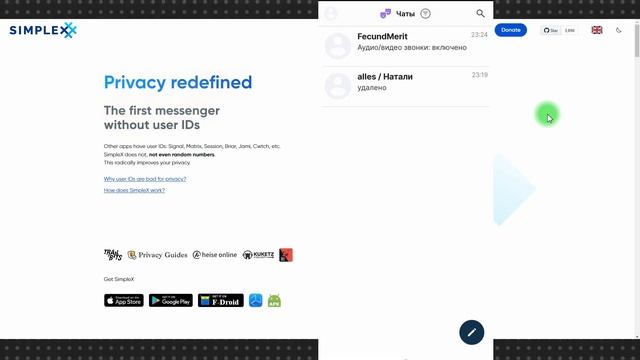
RuTube
This is the second video in a Russian-language series about SimpleX Chat, demonstrating its primary functionality including messaging, encrypted voice and video calls, automatic message deletion timers, incognito mode, and database backup capabilities.

SimpleX: La mensajeria a prueba de curiosos
Francisco Barral
This Spanish article explains that SimpleX Chat uses no user identifiers and instead generates unique, temporary addresses for each connection. It describes the app's use of end-to-end encryption via the Signal Protocol, peer-to-peer connections where possible, and privacy features including disappearing messages, multiple chat profiles, and incognito mode.

SimpleX Chat: Mensajeria segura y comunidades descentralizadas
El Ecosistema Startup
This Spanish startup-focused article presents SimpleX as a fully decentralized messaging platform with independent security audits completed in 2022 and 2024. It highlights practical applications for startup founders and community managers who need confidential discussions without depending on centralized platforms, with availability across iOS, Android, macOS, Linux, and Windows.
Apps de Mensajeria Seguras: Analisis Tecnico Completo
EsGeeks
This Spanish technical analysis describes SimpleX's approach to radical metadata reduction through ephemeral addresses and message queues specific to each contact, preventing reconstruction of social graphs. It rates SimpleX as suitable for users with strict privacy models and advanced technical knowledge, noting that while IP addresses remain visible to relay servers, using Tor resolves this.
Mensajeros descentralizados mas seguros
EsGeeks
This Spanish article on secure decentralized messengers categorizes SimpleX Chat as focusing on minimalism and maximum security, with a high level of anonymity and absence of metadata. It notes SimpleX suffers from limited functionality and low popularity compared to other messaging platforms.
Conoce las alternativas a Telegram de mensajeria encriptada y segura
CriptoNoticias
This Spanish crypto news article presents SimpleX Chat as a privacy-focused alternative to Telegram, noting that developers believe persistent alphanumeric identifiers compromise privacy. It highlights SimpleX's use of temporary anonymous message queue identifiers and single-use QR codes that reduce traceability.

Bitcoin.ar
This tutorial from ONG Bitcoin Argentina presents SimpleX as "the first mailbox without user identification," launched in 2021. It notes that while SimpleX includes standard messaging features, its ergonomics remain less fluid than WhatsApp or Signal and can be more restrictive when adding contacts, positioning it as suitable for privacy-conscious users willing to sacrifice daily convenience.
Top aplicativos de mensagens mais seguros
Moyens I/O Portugal

Simplex: como usar o app de mensagens mais privado do mundo
Soberano News
This Portuguese guide describes SimpleX as designed to not know who you are, with whom you speak, or when you speak, using blind relay servers that operate as message forwarders without identifying senders or recipients. It acknowledges the app may be slower and have a less polished design than competitors, making it ideal for journalists, activists, and those concerned with digital surveillance.
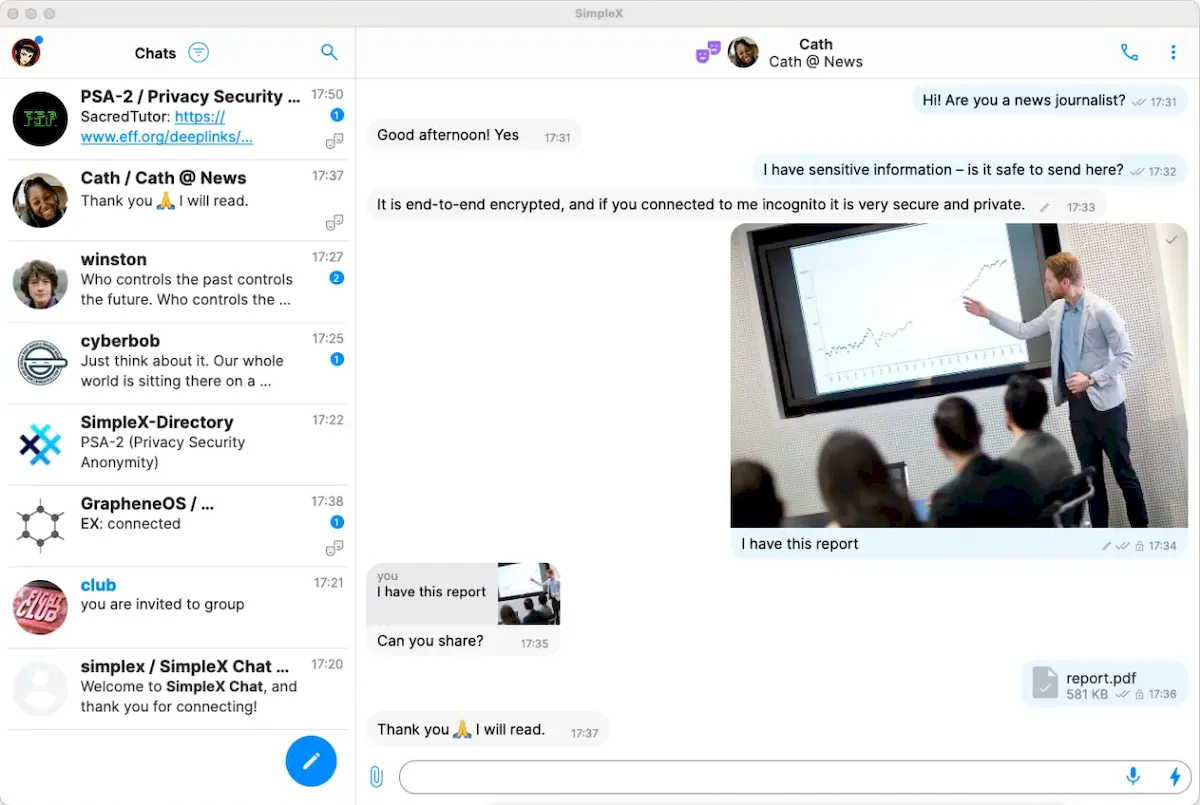
Como instalar o mensageiro Simplex Chat no Linux via Flatpak
Edivaldo Brito
This Portuguese tutorial explains how to install SimpleX Chat on Linux via Flatpak, describing it as a private, open-source encrypted messenger with no user IDs. It lists SimpleX's features including end-to-end encrypted messages, files, images, audio/video calls, secret group chats, instant private notifications, and portable chat profiles, while emphasizing that SimpleX uses no phone numbers or other user identifiers and stores all data on client devices.
Le 10 migliori app di messaggistica per chat sicure, anonime e rispettose della privacy
Jacopo Coccia
This Italian article lists the 10 best messaging apps for secure and anonymous chats, mentioning apps like Threema, Signal, and Wire that offer end-to-end encryption and zero-log policies. SimpleX Chat is not specifically named in the available excerpt, which focuses on the general landscape of privacy-focused messaging and the growing need for data protection.
No Trust Verify
This article from the NoTrustVerify blog describes SimpleX as the first messaging platform that doesn't require any login, using the SimpleX Messaging Protocol (SMP) with one-way message queues. It highlights features like incognito mode with random names per contact and live message typing visibility, while acknowledging that multi-device synchronization and large group management still need improvement.

GatoOscuro
This interview with SimpleX founder Evgeny Poberezkin covers the protocol's design beginning in 2020 and mobile app launch in March 2022. Poberezkin acknowledges the "100% private" claim is aspirational marketing rather than absolute truth, and explains that the fully open-source, decentralized architecture prevents government backdoors from compromising the entire network.
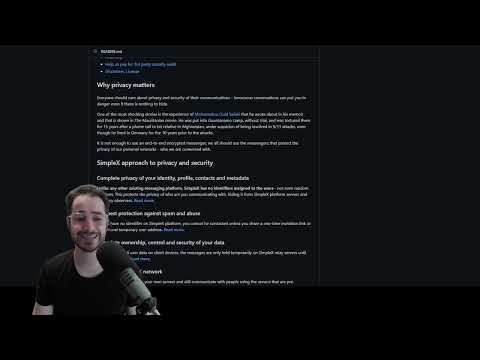
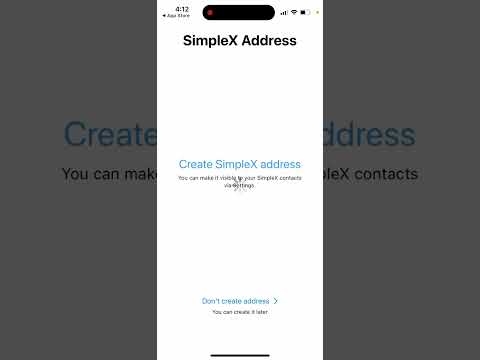


匿名メッセージアプリ - Simple X Chat の設定と使い方
ひとりかくれんぼ / note.com
This Japanese article covers SimpleX Chat's settings and usage, including configuration of global chat settings for complete message deletion, disabling link previews, activating SimpleX Lock with a passcode, and enabling self-destruct mode. The author recommends using a VPN alongside SimpleX for genuine anonymity and stresses that message deletion requires mutual consent between users.
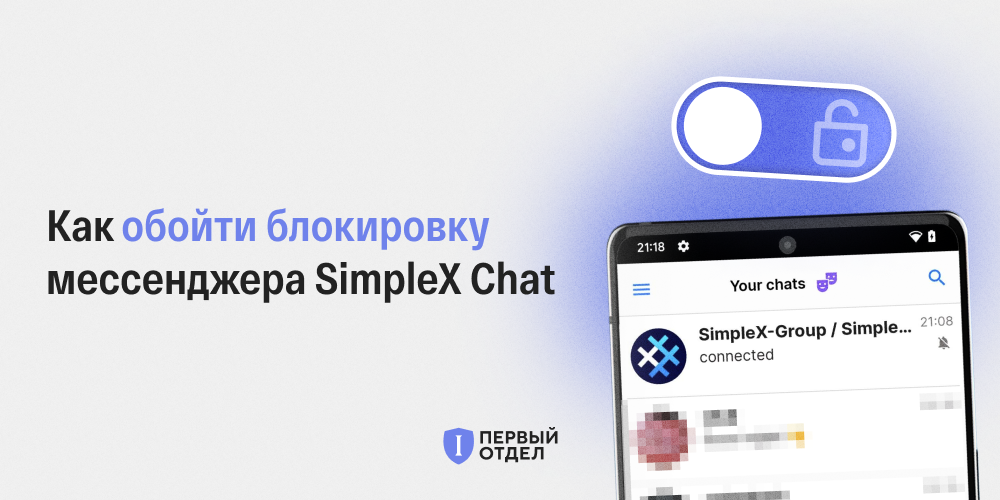
dept.one
This Japanese article explains that SimpleX Chat was blocked in Russia in September 2024 due to its confidentiality and security features, and provides three methods to bypass the block: using a developer-provided proxy, a third-party SOCKS proxy, or a local proxy app like Orbot. It describes SimpleX as a highly secure messenger with no user identification, decentralized architecture, and scrambled message ordering to prevent timing attacks.

IQ.wiki
This IQ.wiki page provides a comprehensive overview of SimpleX Chat, covering its custom protocols (SimpleXMQ and SMP), end-to-end encryption with the Signal Double Ratchet algorithm, and post-quantum resistant encryption via CRYSTALS-Kyber. It notes key milestones including the v1 mobile release in 2022, Jack Dorsey's investment in August 2024, and planned Community Vouchers utility token system for 2026.

SimpleX: how to use the world's most private messaging app
Soberano News
This English guide explains SimpleX's approach of deleting metadata rather than just encrypting messages, using servers as blind relays with temporary one-way queues where servers cannot identify senders or recipients. It acknowledges the app can be slower and have a less polished interface than competitors, positioning it for journalists, activists, and those concerned about digital surveillance.
Institute for Libertarian Ideas / Japan
This Libertarian Institute article emphasizes that SimpleX serves everyday citizens rather than just activists, providing significant privacy improvements with minimal sacrifice of convenience. It highlights identity flexibility where users can change display names per contact, hidden profiles behind password protection, and notes SimpleX functions as an anonymization network similar to Tor.

Lepszy i bezpieczniejszy komunikator niz Signal
Selfhosty.pl
This Polish article argues there are more secure messengers than Signal, noting that Signal's requirement for a phone number is a serious privacy weakness since phone numbers and IP addresses can be used to track users. The article recommends exploring alternatives that do not require a phone number for registration, positioning them as safer choices for users concerned about government surveillance and data breaches.
Ni ming tong xin huan jing gou jian - messeji apuri osusume ichiran
ひとりかくれんぼ / note.com
This Japanese article strongly recommends SimpleX Chat as the top choice for anonymous secure communication, emphasizing that it requires no phone number or email and doesn't use user identifiers or collect metadata. The author notes that user experience is mostly acceptable with only minor delays in call connections, and observes that SimpleX adoption remains relatively low in Japan.
Tokumei de ikiru tame no saisho no kankyo kochiku to kihon no hanashi
ひとりかくれんぼ / note.com
This Japanese article about building an anonymous digital life uses SimpleX Chat as the recommended contact method for readers seeking personalized guidance on privacy topics. It presents SimpleX solely as a secure, end-to-end encrypted communication channel without elaborating on its specific features.
Yggdrasil Wiki
This Russian wiki page describes SimpleX as the only messenger that uses no user profile identifiers, not even random numbers, with fully open-source client and server code that anyone can self-host. It explains that SimpleX delivers messages using per-contact message queue identifiers rather than user IDs, with plans to automate queue rotation so that even conversations will have no long-term network-visible identifiers.
Tests & Tips
German review and testing site covering SimpleX Chat. Evaluates the messenger's privacy features, usability, and security properties as part of a broader mobile app testing catalog.
Closed Network Privacy Podcast
TempleOfSats
This open-source bot monitors the RoboSats peer-to-peer Bitcoin trading platform and sends alerts via SimpleX Chat when orders matching user-defined criteria (currency, premium rates, payment methods, trade amounts) are posted. Users manage alerts through simple commands, with a default 7-day alert lifetime and extension capabilities.
LunarDAO
This LunarDAO wiki page presents SimpleX as a privacy-focused federated messaging platform that requires no phone number or account creation, using one-way message queues instead of traditional accounts. It describes features including live typing indicators, voice/video calls, disappearing messages, self-destruct passcodes, and SOCKS proxy routing, while acknowledging challenges with multi-device synchronization and large group management.

AnarSec
This anarchist security guide notes SimpleX Chat uses decentralized servers (not peer-to-peer) with in-memory storage and no phone number requirement. It recommends Cwtch over SimpleX for text-only communication but suggests SimpleX as an acceptable option for voice and video calls, noting that content padding exists to frustrate correlation attacks via message size.

Nowhere.moe
Privacy-focused hosting service operates community SimpleX SMP and XFTP relay servers with both clearnet and Tor onion addresses. Runs anonymous SimpleX chatrooms and provides tutorials on privacy and self-hosting.
XMRBazaar
This Monero community post announces an unofficial XMRBazaar group on SimpleX Chat, providing two join links - one described as "possibly slower but uncensorable" using direct server protocols and another via the SimpleX Directory Service described as "faster but censorable." The group migrated from Matrix to SimpleX for discussing the Monero marketplace.
Simplified Privacy
Simplified Privacy lists several active SimpleX Chat groups covering privacy, security, cryptocurrency (Monero and Bitcoin/Lightning Network), Nostr protocol, and a Switzerland-based privacy community. The page positions SimpleX alongside Session and XMPP as decentralized messaging platforms for privacy-conscious technical discussions.
Hack Liberty
This Hack Liberty forum guide provides detailed instructions for deploying SimpleX Chat's SMP and XFTP servers using Docker Compose, with dual-network configuration for both clearnet and Tor operation. It covers port configuration, security measures including running containers as unprivileged users, and emphasizes backing up private CA keys before deletion from the server.
SimpleX Chat
MoneroKon 2024 conference talk by Evgeny Poberezkin on how SimpleX Chat bridges the gap between privacy-focused and mass-market messaging applications.
Monero Talk
Monero Talk episode 239 featuring a discussion of SimpleX Chat's integration with Monero, payment incentives for server operators, and the broader privacy messaging landscape.
Remember Lads Subscribe to Big Bear
Blog de Joselito
In this follow-up Spanish post, the author details SimpleX's technical strengths including metadata protection through unidirectional message queues, double-layer encryption, and automatic message deletion from servers after receipt. While primarily an XMPP user, the author calls SimpleX "an excellent messaging platform" and appreciates that robust security works automatically without user effort.
Blog de Joselito
This Spanish blog post acknowledges SimpleX offers superior privacy features over XMPP, including metadata protection and automatic encryption, but argues XMPP is not obsolete. The author identifies a vulnerability in SimpleX's group key distribution relying on administrators, and views SimpleX as promising but unproven long-term, using both platforms with XMPP as his primary messenger.
NoBs Bitcoin
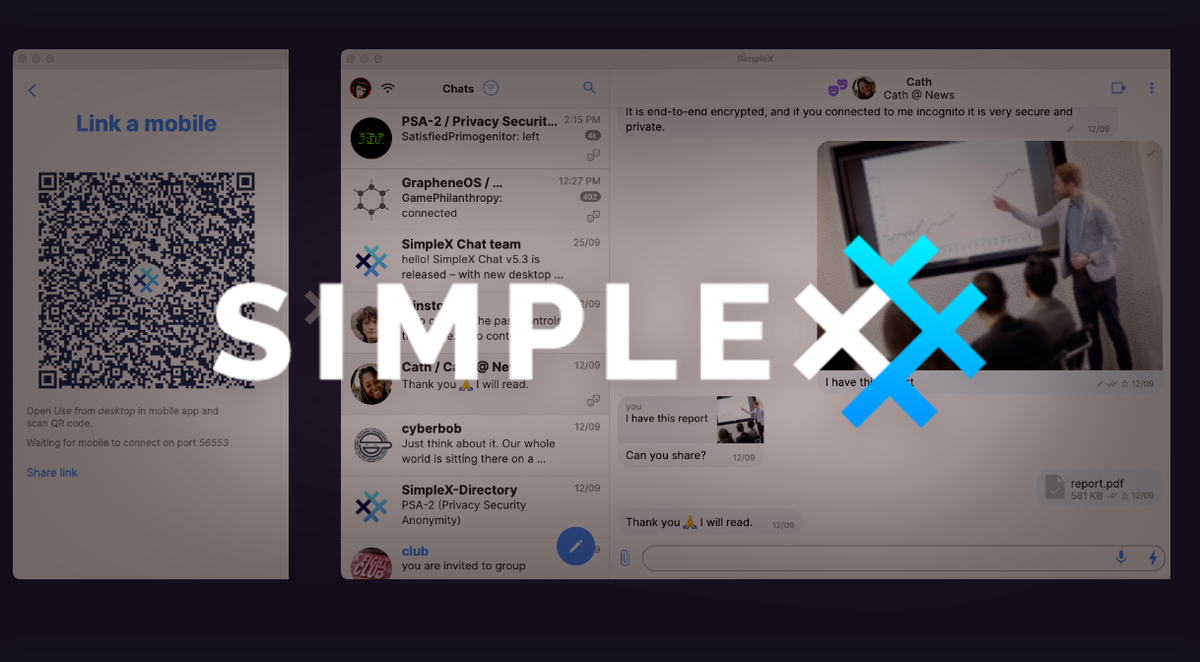
No BS Bitcoin covers SimpleX Chat v5.4, which introduced the ability to link mobile and desktop apps via a secure quantum-resistant protocol on local networks. The update also improved group functionality with faster joining, incognito profile support for groups, and added screen sharing for video calls on desktop.

FreedomNode
FreedomNode compares SimpleX and Session, noting that SimpleX takes privacy further by eliminating user identifiers entirely and using temporary anonymous message queue identifiers for each conversation. The article notes SimpleX represents a more experimental privacy frontier while Session provides greater stability and cross-device compatibility, with SimpleX having limitations around desktop support and requiring both parties to be online to establish connections.

U poshukakh bezpechnoho mesendzhera
KR. Labs Research
This Ukrainian guide to secure messaging describes SimpleX as a decentralized P2P messenger where users own their own servers, requiring no phone numbers or usernames for registration. It highlights end-to-end encryption by default with no metadata collection, positioning SimpleX as an advanced privacy solution appealing to activists and journalists.
O SimpleXchat e uma plataforma de mensagens revolucionarias que redefinem a privacidade
Alex Emidio
This Portuguese-language Medium article describes SimpleX Chat as a revolutionary privacy platform that eliminates user IDs entirely, requiring no phone numbers or email addresses. It highlights end-to-end encrypted messages, group chats, file sharing, disappearing messages, and encrypted audio/video calls, all operating on decentralized servers using unidirectional message queues.
AdminForge
AdminForge, a German community infrastructure provider, announces hosting a new SimpleX Chat server at simplex.adminforge.de. It describes SimpleX's Double-Ratchet encryption, multiple profile support, anonymous group participation, and explains that SMP servers function only as relays holding messages until recipients reconnect while XFTP file transfer servers retain uploads temporarily.

Michal Kodnar
This comparison characterizes SimpleX as the first identifier-free messenger, using temporary anonymous paired message queues instead of user IDs. The author finds both Session and SimpleX are interesting projects but notes SimpleX remains buggy and incomplete, requiring QR codes for new connections and lacking disappearing messages at the time of writing.
Freedom.Tech
Freedom.tech's review praises SimpleX Chat's beautiful UI, metadata protection through its peer-to-relay architecture, double ratchet encryption, and incognito mode for pseudonymous communication. The review identifies key weaknesses including intermittent notifications on both iOS and Android and flaky audio/video calls in beta, but concludes it is a fantastic tool ideal for activists, journalists, and privacy-focused users.
Mesajlasma Uygulamalari
Gizli Kalsin / Medium
This Turkish Medium article lists SimpleX Chat as one of six recommended secure messaging applications, describing it as a decentralized instant messaging app that operates without phone numbers or user IDs. It notes users join conversations by scanning QR codes or clicking invite links, and the application provides complete anonymity.
NoBs Bitcoin
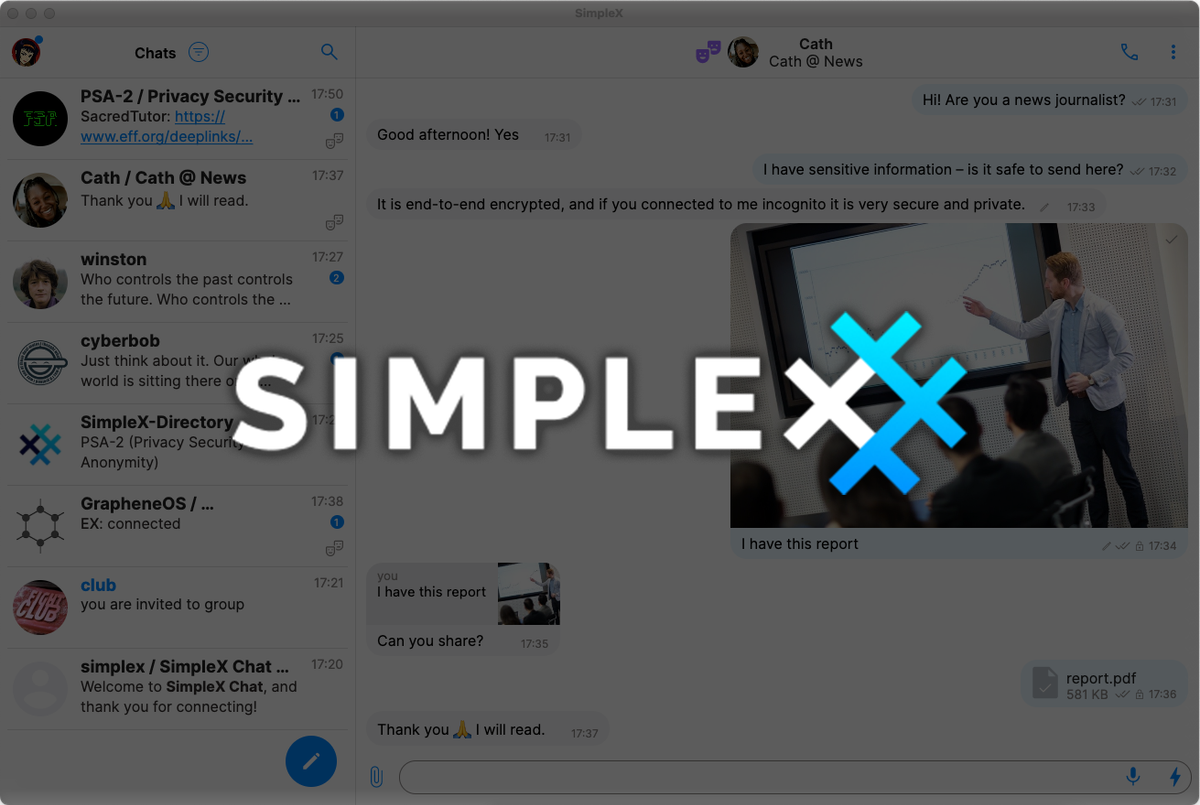
No BS Bitcoin reports on SimpleX Chat v5.3, which introduced a new desktop app, a directory service with group improvements, and encrypted local files and media with forward secrecy. The release also achieved a 40% reduction in memory usage and added new privacy controls for message visibility.
SimpleX CHAT - анонимный мессенджер без ID
Чёрный Треугольник

te-st.org
This review by Russian digital rights organization Te-st characterizes SimpleX Chat as one of the first messengers where the list of missing security features is notably short. It emphasizes that the absence of UserID means users cannot be identified afterward, and unlike most secure messaging apps, no phone number is required.

SimpleX Chat je revoluci v sifrovane komunikaci
Kryptoanarchista.cz
This Czech crypto-anarchist publication calls SimpleX a revolution in encrypted communication that surpasses Signal and Threema. It praises the temporary anonymous pairwise identifiers that prevent correlation attacks, and the phone-number-free setup via QR codes, while noting limitations in desktop availability and the need for an alternative channel to initiate contact.

Kryptoanarchista.cz
This Czech crypto-anarchist blog presents SimpleX as an open-source encrypted messenger requiring no KYC, supporting text, voice, video calls, file sharing, and Tor connectivity. It notes the absence of persistent identities prevents tracking of user connections but acknowledges current limitations including the need for QR code exchange to start conversations and lack of cross-device synchronization.
SimpleX Chat #2: обзор основных функций
Теплица социальных технологий
SimpleX Chat: мессенджер без UserID с максимальной защитой переписки
Теплица социальных технологий
Bornhack 2023 conference, Chaos Computer Club
This is a spontaneous talk about the relatively new (mobile apps released 2022) open source SimpleX Chat instant messenger protocol and software, and some reasons why it's a far better choice than in particular Matrix.
App de mensajeria SimpleX Chat
Alt43.es
This Spanish-language Medium article reviews SimpleX Chat's security features including end-to-end encryption, open-source code, and the ability to register without a phone number or email. It explains that users exchange temporary anonymous identifiers via QR codes or one-time links, with all data stored only on client devices using an encrypted, portable database format.

On a trouve l'app de messagerie iPhone la plus incognito
iPhon.fr
This French iPhone blog highlights SimpleX Chat as the most confidential messaging application on iOS, featuring no user identification requirements, encrypted metadata and profile hiding, and decentralized infrastructure allowing users to run it on personal servers. Contacts are established via unique QR codes rather than phone numbers or usernames.
Simplex - Messagerie securisee avec serveur auto-heberge
Paf LeGeek
No Trust Verify / Medium
NoTrustVerify describes SimpleX Chat as the first messaging platform that requires no login and respects privacy by default, operating through a decentralized architecture using one-way message queues rather than centralized servers. The article discusses incognito mode, live message typing indicators, and separate chat profiles, while noting challenges around multi-device synchronization and large group management.
Kusaimara
This Japanese blog post announces that SimpleX Chat added Japanese language support in version 5.1 released in late May 2023. It notes SimpleX doesn't assign unique user IDs and supports Tor network communication, while acknowledging that account portability requires database passphrase export rather than simple login across devices.
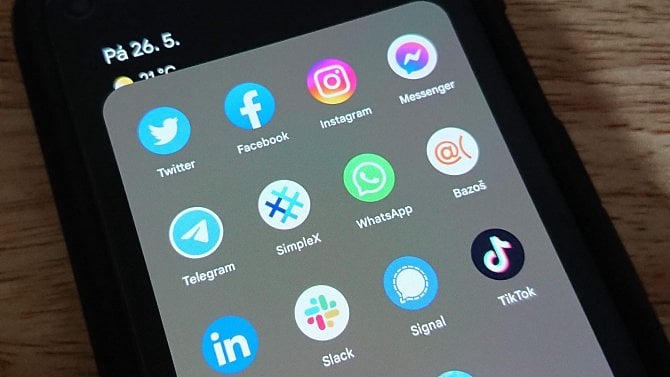
Bezpecnejsi nez Signal nebo Telegram? SimpleX nabidne absolutni soukromi bez vytvareni osobniho ID
Cnews.cz
This Czech tech news article presents SimpleX as safer than Signal or Telegram, highlighting its elimination of permanent user IDs in favor of temporary anonymous message identifiers deleted immediately after sending. It notes the project originated in 2020 and gained attention when Jack Dorsey endorsed it as potentially more secure than Signal or Telegram.
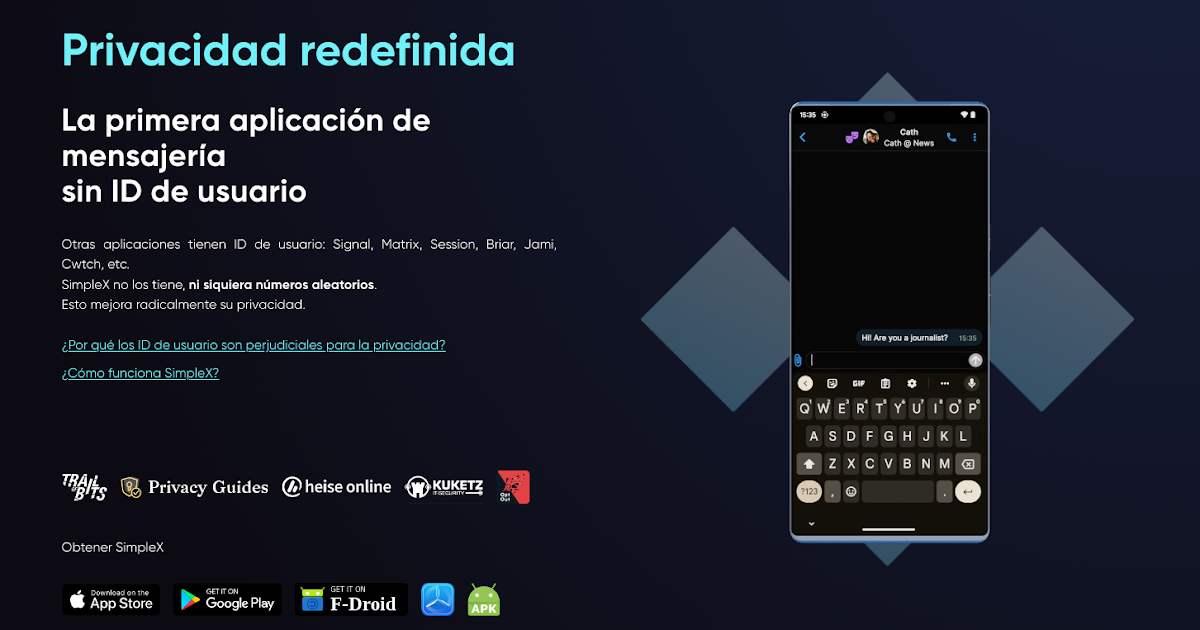
SimpleX Chat: la app de mensajeria segura sin identificadores de usuario
Computekni
This Spanish article describes SimpleX Chat as the first messaging platform without user identifiers of any kind, using end-to-end encryption and QR codes for private connections. It highlights the app's availability on iOS, Android, and F-Droid, and notes its open-source codebase allows public inspection and quick resolution of security issues.

Opt Out Podcast
This Opt Out Podcast episode features SimpleX Chat founder Evgeny discussing how privacy aligns with the future of computing. The conversation covers data sovereignty, SimpleX's decentralized architecture, and the project's emphasis on user control, with resources provided on running independent servers.
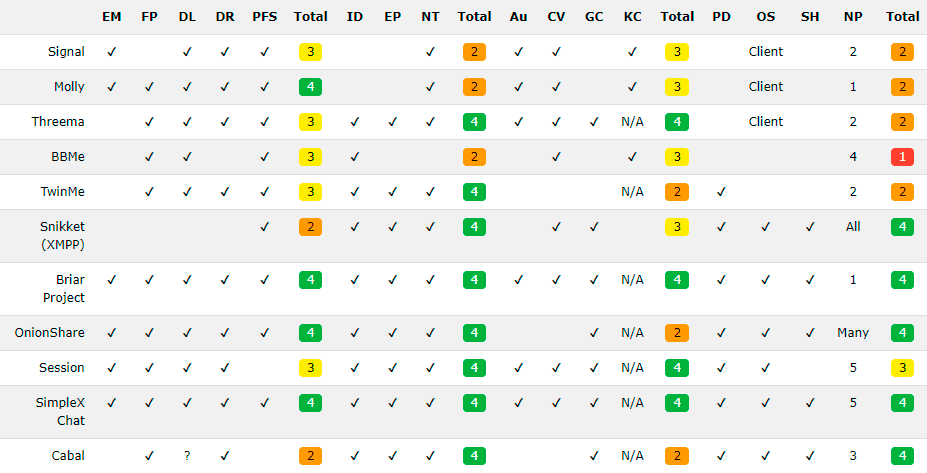
Klassifikatsiya zashchishchyonnykh messendzherov. Novyye proyekty
Habr / GlobalSign
This Habr article classifies SimpleX Chat as an experimental, "extremely privacy-focused" messenger for enthusiasts, describing it as the first messenger without user IDs of any kind. It identifies SimpleX as one of only two messengers (alongside Briar) that meets all security criteria on the author's evaluation scale.
SimpleX Chat - Frohlockender Stern am Open-Source Messenger Himmel
hackspoiler.de
This German security blog highlights SimpleX Chat as a privacy-focused open-source messenger requiring no user ID, with end-to-end encryption for all communications including voice messages, audio/video calls, and self-destructing messages. The article positions it as a secure alternative to proprietary platforms, comparing it to Signal and Session under the AGPL V3 license.

Gute Messenger statt WhatsApp
Digitalcourage
German digital rights organization Digitalcourage describes SimpleX as a relatively new open-source messenger launched in 2022 that uses distributed servers with temporary connection identifiers rather than phone numbers or usernames. While it functions reliably and supports voice messages, file transfers, and video calls, the organization only conditionally recommends it due to its youth as a project and limited track record.
NoBs Bitcoin
This release announcement covers SimpleX Chat v5.2.0, highlighting new message delivery receipts with per-contact opt-out, conversation filtering by favorites and unread status, and group improvements including full context for replied messages. The developers emphasized their commitment to keeping SimpleX protocols open and in the public domain.
NoBs Bitcoin
This article announces SimpleX Server availability on StartOS through the Start9 Registry. It explains SimpleX's server architecture where servers act as simple relays that do not store profiles, contacts, or groups, and each conversation typically uses two different servers - one chosen by each participant - with Tor server support built in.
Novyi super-zakhyshchenyi mesendzhder SimpleX Chat: perevahy y nedoliky
Kostiantyn Korsun / Censor.net
This Ukrainian blog post reviews SimpleX Chat's advantages and disadvantages, noting it requires no phone number, email, or any user identifier - a feature rare among messengers. The author highlights that SimpleX stores all data locally with no cloud storage, supports one-time profile links, an incognito mode with random display names per contact, and invitation-only group chats, while also being fundamentally different from Signal, WhatsApp, Threema, Wire, and Session which all rely on some form of user ID.
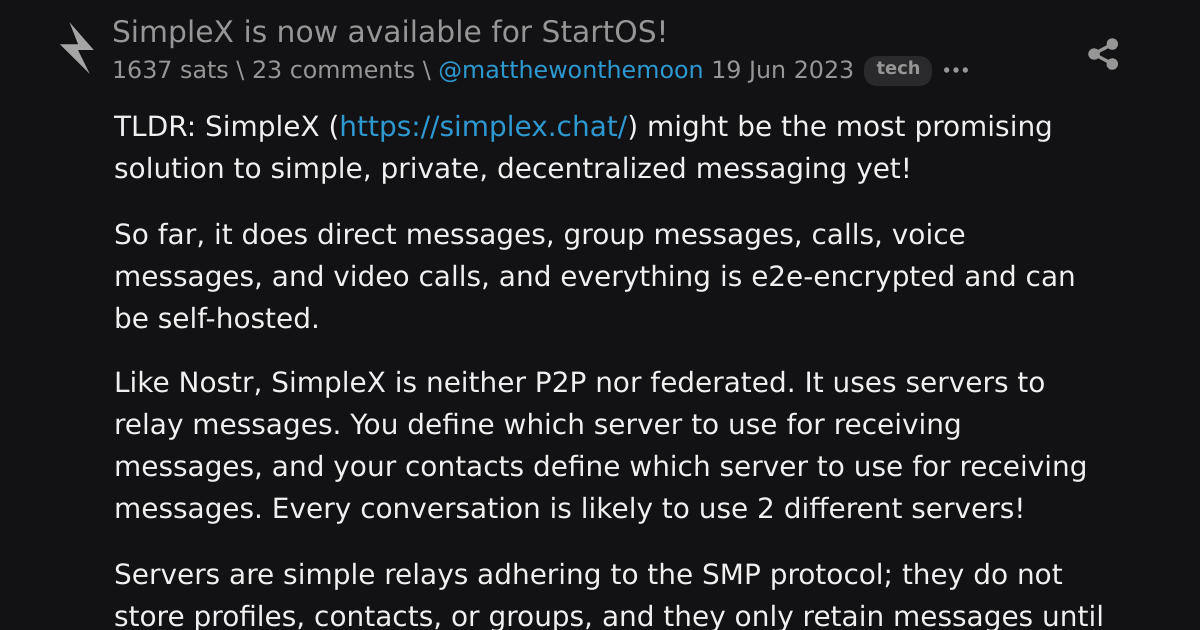
Start9
This Stacker News post announces SimpleX Chat server availability for StartOS (Start9's operating system), describing its support for direct messages, group messages, calls, and video calls with end-to-end encryption. Commenters praise it as "very promising tech" that is "plug and play right at the initial download" and comfortable to recommend to non-technical friends.

App di messaggistica anonime
Le Alternative
This Italian blog about alternative apps describes SimpleX Chat as an open-source, end-to-end encrypted messenger that has received an independent security audit. It emphasizes that the only way to add a contact is through QR code or link, requiring neither phone number nor email address, and notes availability on F-Droid, Play Store, and iOS.

SimpleX: Eindrucke vom Messenger ohne Identifier
Kuketz IT-Security Blog
German privacy blogger Mike Kuketz rates SimpleX as "conditionally recommended," praising its innovative no-identifier design and Tor support. He identifies weaknesses including the absence of contact verification, high battery consumption, and client instability, though notes the developer indicated these issues are being addressed.
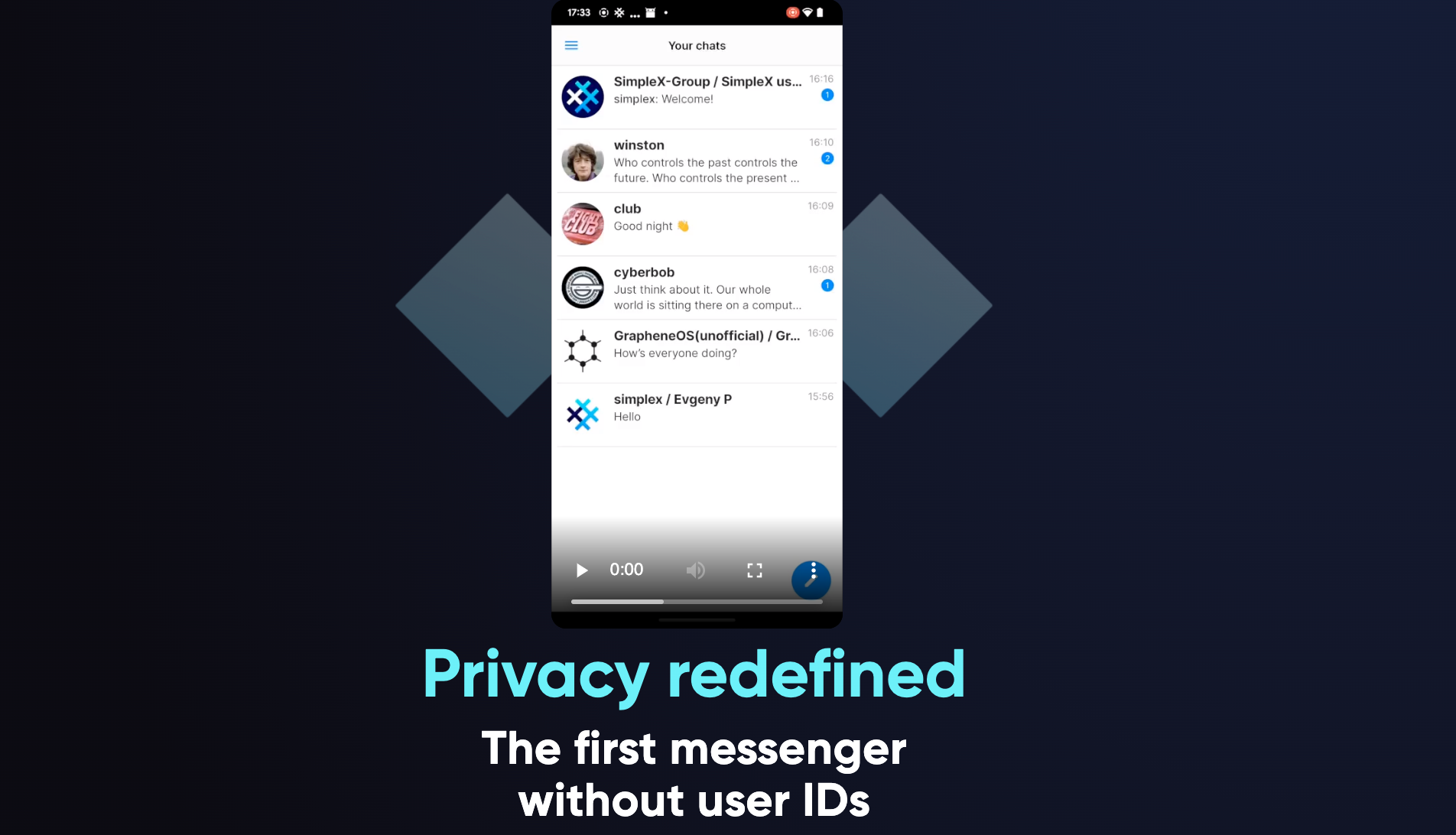
SimpleX - первый мессенджер без идентификаторов пользователей
Habr / Privacy Accelerator
This Russian-language Habr article introduces SimpleX Chat as a privacy-focused messenger that operates without user identifiers, using separate message queue identifiers for each contact. It highlights the SimpleX Messaging Protocol with end-to-end encryption, Tor routing support, open-source code, and a professional security audit by Trail of Bits.

Open-Source-Messenger SimpleX: Anonym und jetzt auch privat chatten
Heise Online
Heise reports on SimpleX Chat version 4.0 introducing private server authentication through password protection, allowing server operators to control who can receive messages while maintaining the platform's anonymous design. Previously all chat servers were public, but administrators can now restrict access by sharing passwords with intended users.

SimpleXの革命的なアイデアに心を打たれた
vpn53049 / Ameblo
This Japanese blog post explains SimpleX's key innovation: generating unique IDs per conversation rather than using persistent anonymous IDs. The author argues this eliminates the social graph exposure risk inherent in competing apps and solves the practical frustration of managing multiple devices or accounts to maintain anonymity across different social contexts.

プライバシー特化のチャットツール「SimpleX」を利用してみる
Kusaimara Blog
This Japanese blog post from September 2022 shares first impressions of SimpleX as a privacy-focused chat tool available on mobile. The author finds it usable despite being in development and expresses cautious optimism, noting SimpleX later gained Japanese language support by June 2023.
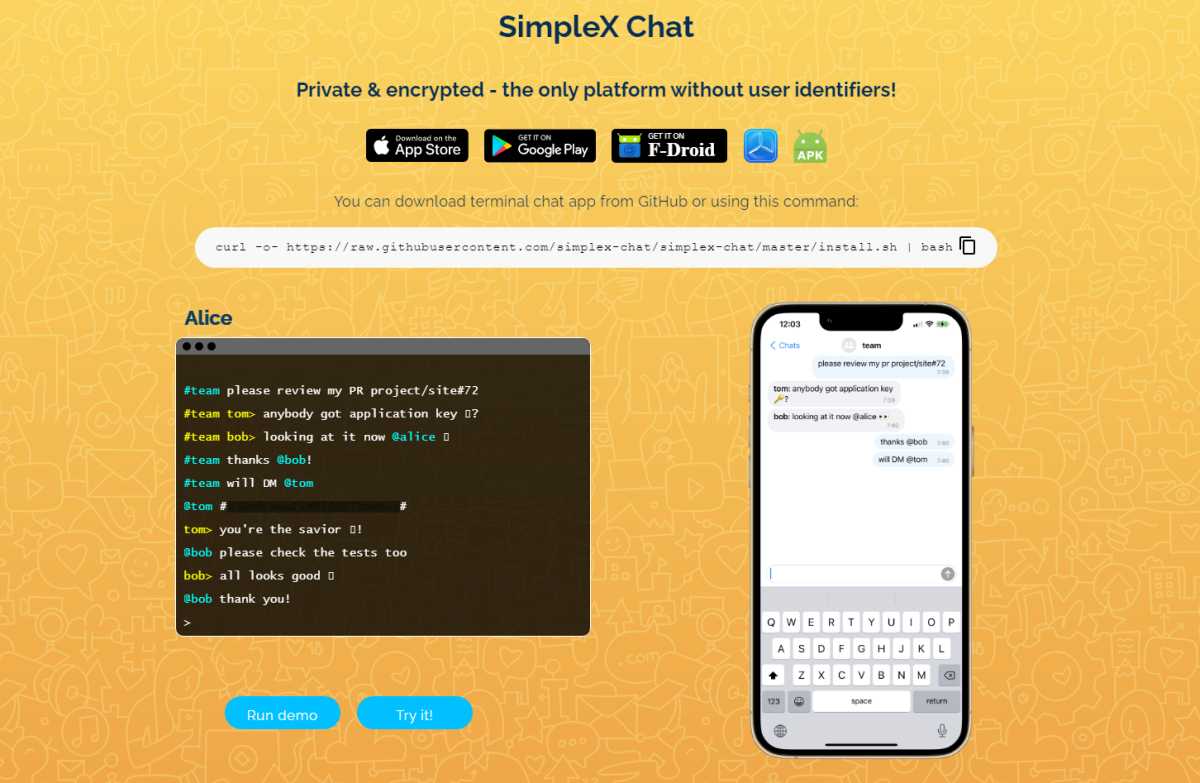
Asi funciona esta app de mensajeria segura que carece de identificadores para los usuarios
WWWhatsnew
This Spanish tech news site explains that SimpleX Chat delivers messages without using sender or recipient identifiers, relying on the SimpleX Messaging Protocol (SMP) with persistent queues. It describes how users generate unique invitation codes for each contact, with messages stored directly on devices rather than centralized servers.
SimpleX Chat will vollstandige Privatsphare bieten
iphone-ticker.de
German iPhone blog iphone-ticker covers SimpleX Chat's privacy approach of establishing direct connections through shared QR codes or links for end-to-end encrypted messaging. The article highlights version 3.0's push notifications that reveal nothing about chat content or contacts, and the addition of encrypted audio and video calling.

Damit Apple nichts mitliest: SimpleX-Chat aktualisiert auf Version 3
Heise Online
Heise covers SimpleX Chat version 3's privacy-focused iOS push notifications that contain no information about contacts or chat content, preventing any data from reaching Apple's servers. The update also introduced database export/import functionality and faster message transmission while maintaining backward compatibility.
SimpleX.Chat e chat mrezha, koyato zapazva poveritelnostta na metadannite
Hristo Hristov / Medium
This Bulgarian Medium article explains SimpleX as a decentralized client-server network that routes messages through disposable nodes while maintaining sender and receiver anonymity. It details the dual end-to-end encryption layers, DNS independence, and the absence of any global user identities, noting that network connections can only be discovered through observation of IP packet timing.

SP21 Pavol Luptak o cenzure, bezpecnosti, nomadstvi
Stackuj.cz Podcast

Serokell
Serokell interviews SimpleX Chat creator Evgeny Poberezkin about building the platform in Haskell, chosen for its strength in highly concurrent communication applications with features like green threads and transactional memory. The article discusses challenges of compiling Haskell to mobile devices and the project's exploration of monetization through optional subscriptions while remaining fully open-source.
SimpleX Chat, en oppen och saker chatt
Oppet Moln
This Swedish article introduces SimpleX as an open and secure chat that requires no global identity such as phone number, username, or IP address. It claims superior security compared to Signal, XMPP/Matrix, and other P2P protocols, while acknowledging that users must evaluate the security claims themselves and that usability tradeoffs exist.
Encrypted messengers - comparison
Juraj Bednar
This encrypted messenger comparison describes SimpleX as the youngest app in the review, using asymmetric connections through QR codes or URLs that make it difficult to correlate sending and receiving patterns. The reviewer notes the interface shows signs of ongoing development and some reliability issues, and suggests SimpleX suits users prioritizing anonymity for temporary rather than permanent communications.
Prehlad a porovnanie sifrovanych komunikacnych nastrojov - messengerov
Juraj Bednar
In this Slovak overview of encrypted communication tools, Juraj Bednar describes SimpleX as the youngest application in the comparison, using asymmetric connections via QR codes with no user identifiers. He notes basic functionality including audio and video calls works, but advises waiting before using it for family or business communication due to ongoing development and some technical issues.

SimpleX-Chat jetzt auch fur Smartphones
GNU/Linux.ch
This Swiss GNU/Linux community site reports on SimpleX Chat's release of smartphone applications for iPhone and Android, expanding beyond its command-line interface. The article emphasizes end-to-end encryption, decentralized architecture, and QR code-based peer-to-peer connections without routing data through SimpleX servers.
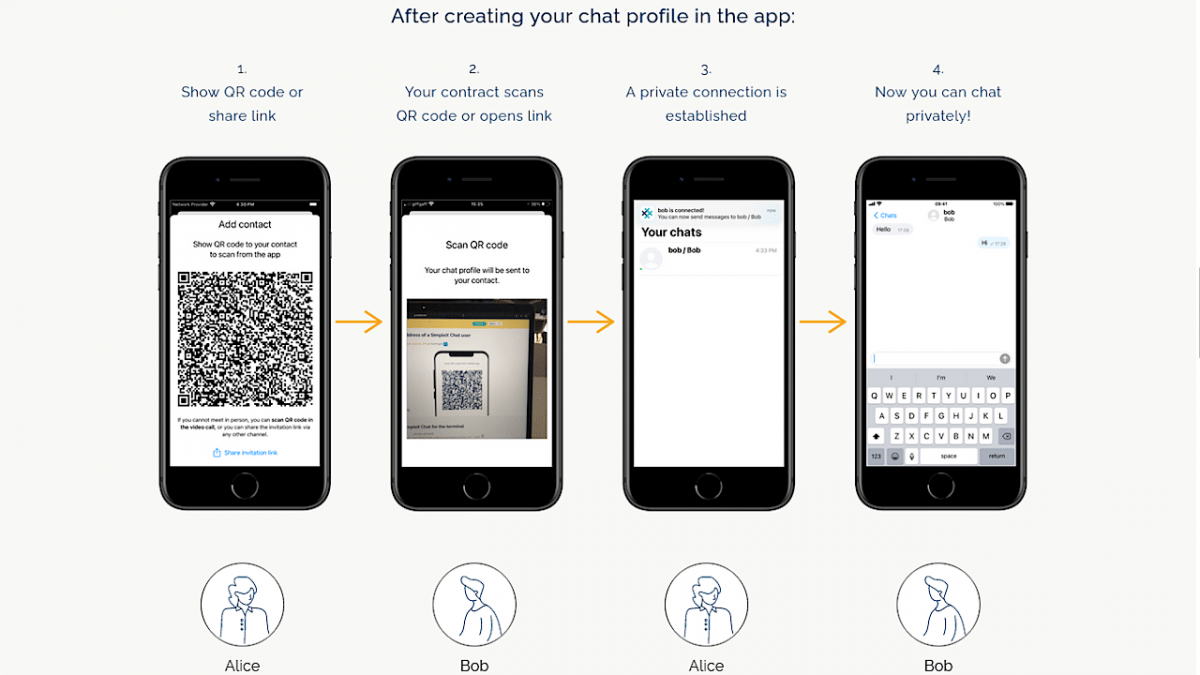
Dezentral, anonym, verschlusselt: SimpleX-Messenger jetzt auch furs Smartphone
Heise Online
Heise reports on SimpleX Chat releasing smartphone apps for iPhone and Android after initially being available only as a command-line application. The article highlights the decentralized architecture where servers cannot know who communicated with whom, with users sharing QR codes to establish encrypted connections.
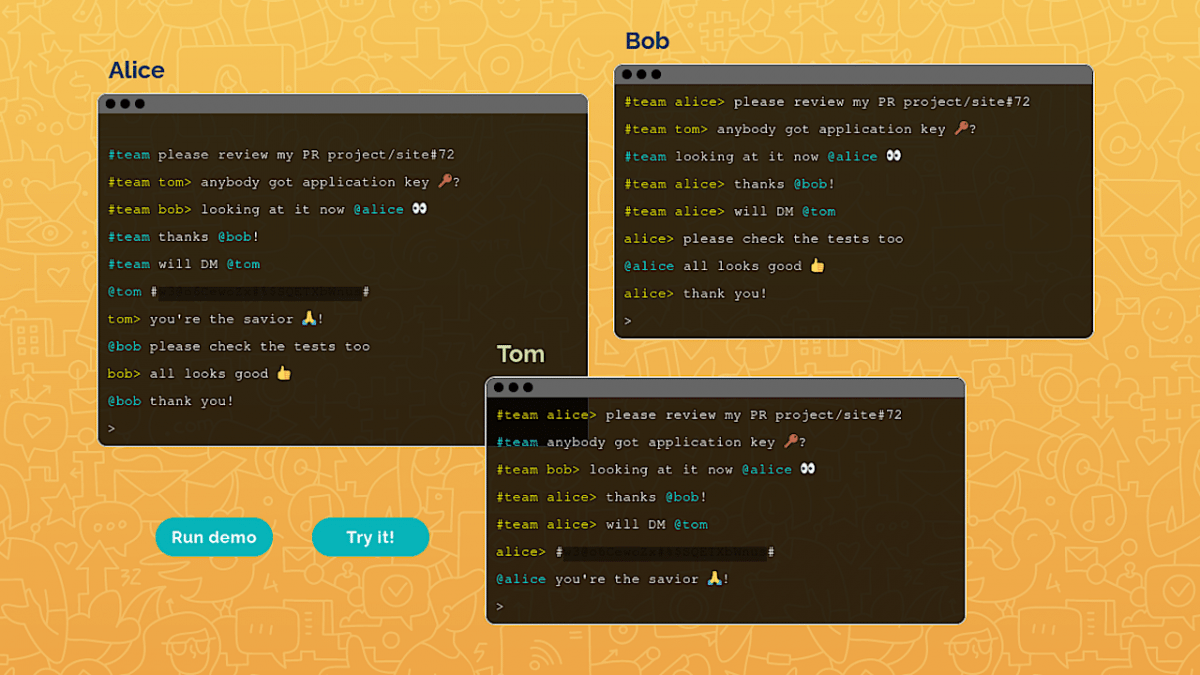
SimpleX 1.0.0: Dezentraler, Privatsphare achtender und verschlusselter Chat
Heise Online
Heise covers SimpleX Chat reaching version 1.0.0, marking its protocol as stable with guaranteed compatibility for future releases. The article explains the dual-layer end-to-end encryption using a double-ratchet mechanism that changes keys for each message, with decentralized servers routing messages without storing user data or metadata.
SimpleX 1.0.0: Dezentraler, Privatsphaere achtender und verschluesselter Chat
Tarnkappe.info
This German security forum post announces SimpleX's stable 1.0.0 release, describing its two-layer end-to-end encryption with double-ratchet algorithm and unidirectional simplex queues with unique encryption keys per queue. It emphasizes that establishing secure channels requires exchanging encryption keys through QR codes or invitations, and notes the terminal client's availability plus a DigitalOcean one-click server deployment option.

SimpleX Chat la aplicacion de mensajeria que todo entusiasta de la privacidad deberia utilizar
GatoOscuro
This Spanish-language article recommends SimpleX Chat as an exceptional privacy platform that eliminates metadata surveillance risks present in alternatives like Signal. The author highlights out-of-band key exchange making man-in-the-middle attacks practically impossible, anonymous peer identifiers, self-destructing messages, and a decentralized client-centric architecture.

Messenger SimpleX schutzt Privatsphare und ist Open Source
Linux-Magazin
German Linux Magazin reports on SimpleX as an anonymous, encrypted open-source messenger (AGPLv3) that uses no central server to track connections - servers only relay messages, and anyone can self-host a message broker using SimpleXMQ. The article highlights SimpleX's double ratchet end-to-end encryption with forward secrecy and metadata concealment, noting that at the time of writing only a command-line client was available with mobile apps in development.

Jetzt auch auf Deutsch anonym chatten: Update fuer Messenger SimpleX
Heise Online
Heise, a major German tech publication, reports on SimpleX version 4.0 adding a German language pack. The update also introduced encryption of received and stored messages using SQLCipher, a TypeScript SDK for chatbot integration, and self-hosted WebRTC ICE server support. The article notes the founder was seeking donations for a $20,000 independent security audit.
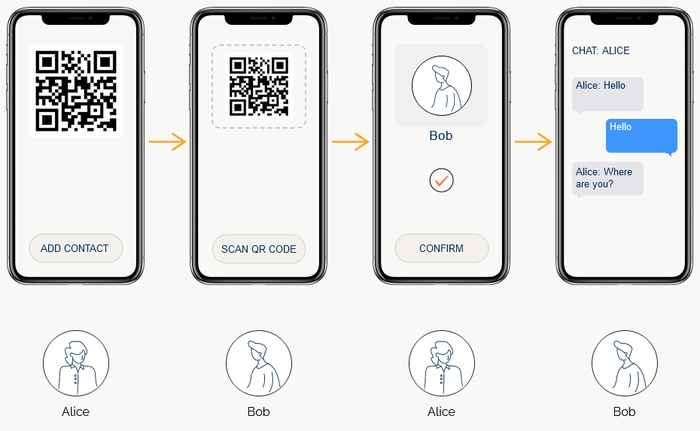
GNU/Linux.ch
This GNU/Linux-focused Swiss German article explains SimpleX's architecture as a decentralized network using one-way nodes for asynchronous message forwarding, avoiding any form of identity for message routing. It details two layers of end-to-end encryption with forward secrecy, and notes that servers do not retain user records, do not communicate with each other, and have no way to obtain a complete list of participating servers.
freie-messenger.de
This German free messenger comparison site provides a comprehensive overview of SimpleX Chat, noting its distinctive lack of user identifiers and end-to-end encryption with data stored only on client devices. The assessment concludes that while SimpleX is an innovative privacy-focused messenger suitable for individuals and activists, it has limitations for business use and lacks interoperability with standard protocols like XMPP.
Privacy Guides
Privacy Guides recommends SimpleX Chat as an instant messenger that does not depend on any unique identifiers such as phone numbers or usernames. The page notes its double ratchet encryption with quantum resistance, metadata protection through unidirectional message delivery queues, and independent security audits conducted in July 2024 and October 2022.

Whonix Wiki
The Whonix wiki describes SimpleX as a general-purpose instant messaging client with both client and server released as Freedom Software under GNU AGPLv3. It highlights mandatory end-to-end encryption, quantum-resistant encryption by default for one-on-one chats, and incognito mode, while providing detailed Flatpak installation instructions and warning that users must export their chat database before shutdown to avoid losing all data.
Les messageries privees
Wikilibriste
This French privacy guide recommends SimpleX for users seeking a strict, intentionally confidential messaging model. It highlights SimpleX's unique reception addresses per contact, Double Ratchet encryption, incognito mode, and the absence of user identifiers, while noting that user IP remains visible to relay servers unless Tor is used.

Kuketz IT-Security Blog
This comprehensive German messenger comparison table rates SimpleX on dozens of technical criteria. It notes SimpleX's decentralized architecture, post-quantum encryption, NaCl/Signal Protocol cryptography, and Trail of Bits security audit, but gives it a "very limited" recommendation and categorizes it as targeting advanced users rather than beginners.
In a wide sense, blockchain means a sequence of blocks of data, where each block contains a cryptographic hash of the previous block, thus providing integrity to the whole chain. Blockchains are used in many communication and information storage systems to provide integrity and immutability of the data. For example, BluRay disks use blockchain. SimpleX messaging queues also use blockchain - each message includes the hash of the previous message, to ensure the integrity – if any message is modified it will be detected by the recipient when the next message is received. Blockchains are a subset of Merkle directed acyclic graphs.
In a wide sense, blockchain means a sequence of blocks of data, where each block contains a cryptographic hash of the previous block, thus providing integrity to the whole chain. Blockchains are used in many communication and information storage systems to provide integrity and immutability of the data. For example, BluRay disks use blockchain. SimpleX messaging queues also use blockchain - each message includes the hash of the previous message, to ensure the integrity – if any message is modified it will be detected by the recipient when the next message is received. Blockchains are a subset of Merkle directed acyclic graphs.
In a more narrow sense, particularly in media, blockchain is used to refer specifically to distributed ledger, where each record also includes the hash of the previous record, but the blocks have to be agreed by the participating peers using some consensus protocol.
Also known as Merkle DAG, a data structure based on a general graph structure where node contains the cryptographic hashes of the previous nodes that point to it. Merkle trees are a subset of Merkle DAGs - in this case each leaf contains a cryptographic hash of the parent.
This structure by design allows to verify the integrity of the whole structure by computing its hashes and comparing with the hashes included in the nodes, in the same way as with blockchain.
The motivation to use DAG in distributed environments instead of a simpler linear blockchain is to allow concurrent additions, when there is no requirement for a single order of added items. Merkle DAG is used, for example, in IPFS and will be used in decentralized SimpleX groups.
It is used by two parties to exchange end-to-end encrypted messages. The parties will use some key agreement protocol to agree on the initial shared secret key.
Double Ratchet algorithm provides perfect forward secrecy and post-compromise security. It is designed by Signal, and used in SimpleX Chat and many other secure messengers. Most experts consider it the state-of-the-art encryption protocol in message encryption.
Also known as content padding, it is the process of adding data to the beginning or the end of a message prior to encryption. Padding conceals the actual message size from any eavesdroppers. SimpleX has several encryption layers, and prior to each encryption the content is padded to a fixed size.
Also known as content padding, it is the process of adding data to the beginning or the end of a message prior to encryption. Padding conceals the actual message size from any eavesdroppers. SimpleX has several encryption layers, and prior to each encryption the content is padded to a fixed size.
Decentralized network is often used to mean "the network based on decentralized blockchain". In its original meaning, decentralized network means that there is no central authority or any other point of centralization in the network, other than network protocols specification. The advantage of decentralized networks is that they are resilient to censorship and to the provider going out of business. The disadvantage is that they are often slower to innovate, and the security may be worse than with the centralized network.
Decentralized network is often used to mean "the network based on decentralized blockchain". In its original meaning, decentralized network means that there is no central authority or any other point of centralization in the network, other than network protocols specification. The advantage of decentralized networks is that they are resilient to censorship and to the provider going out of business. The disadvantage is that they are often slower to innovate, and the security may be worse than with the centralized network.
The examples of decentralized networks are email, web, DNS, XMPP, Matrix, BitTorrent, etc. All these examples have a shared global application-level address space. Cryptocurrency blockchains not only have a shared address space, but also a shared state, so they are more centralized than email. Tor network also has a shared global address space, but also a central authority. SimpleX network does not have a shared application-level address space (it relies on the shared transport-level addresses - SMP relay hostnames or IP addresses), and it does not have any central authority or any shared state.
A communication system where only the communicating parties can read the messages. It is designed to protect message content from any potential eavesdroppers – telecom and Internet providers, malicious actors, and also the provider of the communication service.
End-to-end encryption requires agreeing cryptographic keys between the sender and the recipient in a way that no eavesdroppers can access the agreed keys. See key agreement protocol. This key exchange can be compromised via man-in-the-middle attack, particularly if key exchange happens via the same communication provider and no out-of-band channel is used to verify key exchange.
Also known as perfect forward secrecy, it is a feature of a key agreement protocol that ensures that session keys will not be compromised even if long-term secrets used in the session key exchange are compromised. Forward secrecy protects past sessions against future compromises of session or long-term keys.
The quality of the end-to-end encryption scheme allowing to recover security against a passive attacker who observes encrypted messages after compromising one (or both) of the parties. Also known as recovery from compromise or break-in recovery. Double-ratchet algorithm has this quality.
The attack when the attacker secretly relays and possibly alters the communications between two parties who believe that they are directly communicating with each other.
This attack can be used to compromise end-to-end encryption by intercepting public keys during key exchange, substituting them with the attacker's keys, and then intercepting and re-encrypting all messages, without altering their content. With this attack, while the attacker does not change message content, but she can read the messages, while the communicating parties believe the messages are end-to-end encrypted.
Such attack is possible with any system that uses the same channel for key exchange as used to send messages - it includes almost all communication systems except SimpleX, where the initial public key is always passed out-of-band. Even with SimpleX, the attacker may intercept and substitute the key sent via another channel, gaining access to communication. This risk is substantially lower, as attacker does not know in advance which channel will be used to pass the key.
To mitigate such attack the communicating parties must verify the integrity of key exchange - SimpleX and many other messaging apps, e.g. Signal and WhatsApp, have the feature that allows it.
It is used by two parties to exchange end-to-end encrypted messages. The parties will use some key agreement protocol to agree on the initial shared secret key.
Also known as key exchange, it is a process of agreeing cryptographic keys between the sender and the recipient(s) of the message. It is required for end-to-end encryption to work. Unless it is possible to secure the key exchange via some second factor, e.g. security code verification, it can be vulnerable to man-in-the-middle attack.
A communication system where only the communicating parties can read the messages. It is designed to protect message content from any potential eavesdroppers – telecom and Internet providers, malicious actors, and also the provider of the communication service.
Also known as perfect forward secrecy, it is a feature of a key agreement protocol that ensures that session keys will not be compromised even if long-term secrets used in the session key exchange are compromised. Forward secrecy protects past sessions against future compromises of session or long-term keys.
Also known as key exchange, it is a process of agreeing cryptographic keys between the sender and the recipient(s) of the message. It is required for end-to-end encryption to work. Unless it is possible to secure the key exchange via some second factor, e.g. security code verification, it can be vulnerable to man-in-the-middle attack.
Also known as key exchange, it is a process of agreeing cryptographic keys between the sender and the recipient(s) of the message. It is required for end-to-end encryption to work. Unless it is possible to secure the key exchange via some second factor, e.g. security code verification, it can be vulnerable to man-in-the-middle attack.
A technique for anonymous communication over a computer network that uses multiple layers of message encryption, analogous to the layers of an onion. The encrypted data is transmitted through a series of network nodes called "onion routers," each of which "peels" away a single layer, revealing the data's next destination. The sender remains anonymous because each intermediary knows only the location of the immediately preceding and following nodes.
A technique for anonymous communication over a computer network that uses multiple layers of message encryption, analogous to the layers of an onion. The encrypted data is transmitted through a series of network nodes called "onion routers," each of which "peels" away a single layer, revealing the data's next destination. The sender remains anonymous because each intermediary knows only the location of the immediately preceding and following nodes.
The most widely used onion network is Tor.
Some elements of SimpleX network use similar ideas in their design - different addresses for the same resource used by different parties, and additional encryption layers. Currently though, SimpleX messaging protocol does not protect sender network address, as the relay server is chosen by the recipient. The delivery relays chosen by sender that are planned for the future would make SimpleX design closer to onion routing.
Peer-to-peer (P2P) is the network architecture when participants have equal rights and communicate directly via a general purpose transport or overlay network. Unlike client-server architecture, all peers in a P2P network both provide and consume the resources. In the context of messaging, P2P architecture usually means that the messages are sent between peers, without user accounts or messages being stored on any servers. Examples are Tox, Briar, Cwtch and many others.
Peer-to-peer (P2P) is the network architecture when participants have equal rights and communicate directly via a general purpose transport or overlay network. Unlike client-server architecture, all peers in a P2P network both provide and consume the resources. In the context of messaging, P2P architecture usually means that the messages are sent between peers, without user accounts or messages being stored on any servers. Examples are Tox, Briar, Cwtch and many others.
The advantage is that the participants do not depend on any servers. There are multiple downsides to that architecture, such as no asynchronous message delivery, the need for network-wide peer addresses, possibility of network-wide attacks, that are usually mitigated only by using a centralized authority. These disadvantages are avoided with proxied P2P architecture.
Network topology of the communication system when peers communicate via proxies that do not form the network themselves. Such design is used in Pond, that has a fixed home server for each user, and in SimpleX, that uses multiple relays providing temporary connections.
Any of the proposed cryptographic systems or algorithms that are thought to be secure against an attack by a quantum computer. It appears that as of 2025 there is no system or algorithm that is proven to be secure against such attacks, or even to be secure against attacks by massively parallel conventional computers, so a general recommendation is to use post-quantum hybrid cryptography - combining post-quantum and traditional algorithms.
Any of the proposed cryptographic systems or algorithms that are thought to be secure against an attack by a quantum computer. It appears that as of 2025 there is no system or algorithm that is proven to be secure against such attacks, or even to be secure against attacks by massively parallel conventional computers, so a general recommendation is to use post-quantum hybrid cryptography - combining post-quantum and traditional algorithms.
In a communication system it refers to anything that uniquely identifies the users to the network. Depending on the communication network, it can be a phone number, email address, username, public key or a random opaque identifier. Most messaging networks rely on some form of user identity. SimpleX appears to be the only messaging network that does not rely on any kind of user identity - see this comparison.
In a communication system it refers to anything that uniquely identifies the users to the network. Depending on the communication network, it can be a phone number, email address, username, public key or a random opaque identifier. Most messaging networks rely on some form of user identity. SimpleX appears to be the only messaging network that does not rely on any kind of user identity - see this comparison.